Saturday 4 July 2009
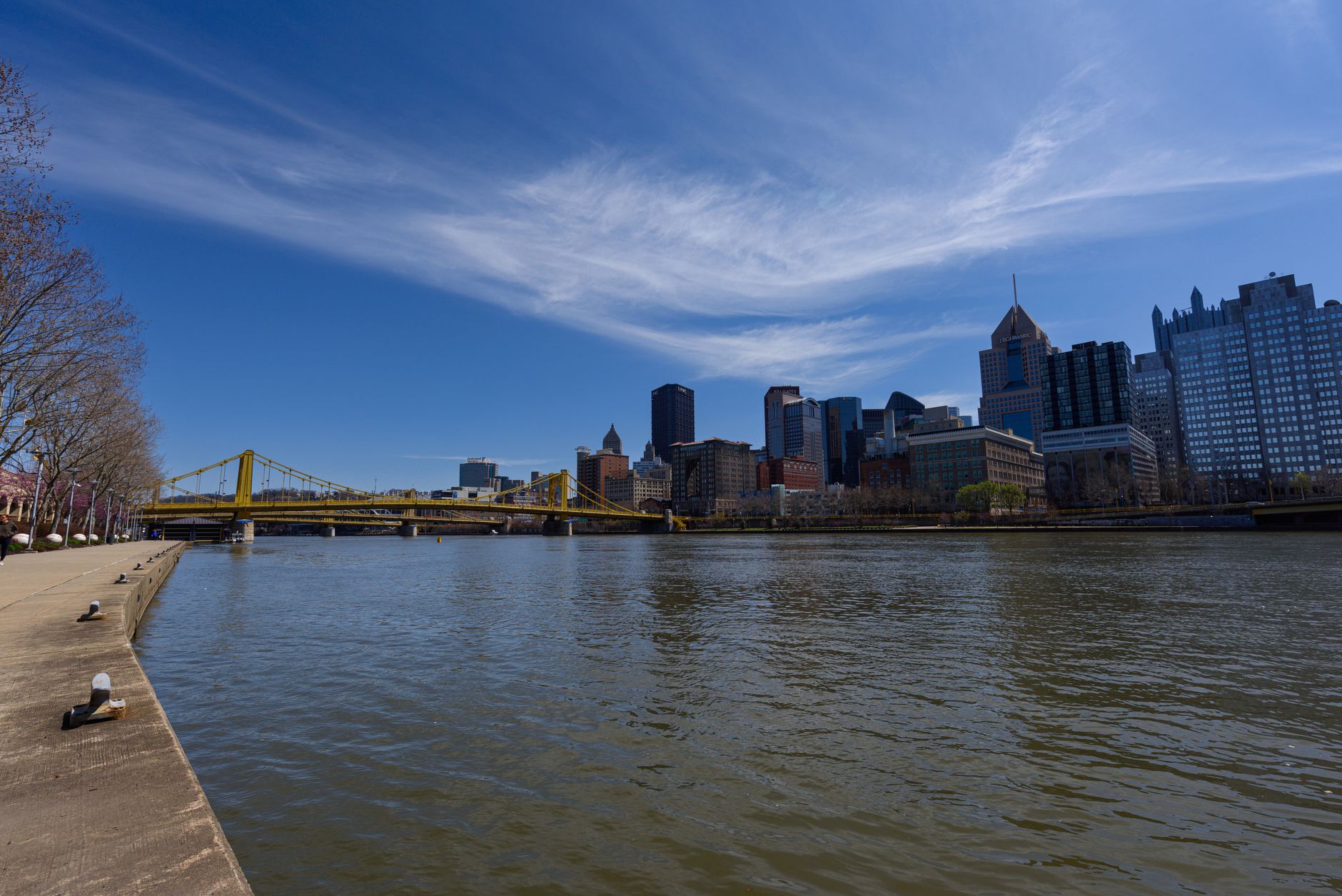
Pittsburgh mural (detail) by the Pittsburgh Technical Institute. Photograph by Brian Cohen |

Wiki-ing our Way to a Better Pittsburgh

By: Chip Walter
October 8, 2008
Something unique is happening in Pittsburgh. It didn't begin in New York or Seattle, it started here, and if it works, it will represent a refreshingly creative way to generate positive civic change for the place you and I call home. The reason it will is because it draws on the best asset we have -- the minds of the people who live here.

It's called Pittsburgh Wiki - a 21st century, web-enabled variation on the kind of pure democracy practiced in Athens 2500 years ago where citizens publicly thrashed out issues until they came to a common resolution, and then worked to translate their thinking into sensible action. The goal is to harness the considerable intellectual firepower of the Pittsburgh region's thoughtful citizenry to help transform it into a world-class city, a leader in the best kind of urban living.

The specific problem under consideration: how do we develop an intelligent, easy-to-use transportation system that works for people of every stripe? One that integrates cars, walking, biking, light rail -- you name the mode. The solution -- a thoughtful plan openly built via the World Wide Web that can actually be put into action. Our tools:  wiki software that creates a collaborative online space where the plan can be developed and a lot of human minds.

The Digital Sandbox
Can something this loosey-goosey really work? Can folks of all kinds actually get into a digital sandbox and play nicely enough to create a document that can fly in the real world?

I certainly wasn’t sure when we kicked off this pilot project on July 24 at a cityLive! event sponsored  by Pop City on regional transportation, but so far the answer seems to be a resounding yes. (Just visit www.pghwiki.org if you have doubts). Over the past several months, the site has been viewed nearly 17,000 times. More than one hundred people have now registered, rolled up their sleeves and begun to write a real plan.

Strategies, research, maps, questions, ideas, studies, goals, insights into budget, policies and planning have all found their way out of people's heads and onto the wiki's pages for visitors and contributors to read, consider and expand upon. Some share ideas, some organize them, some ask hard questions and some copy edit. Contributors include lawyers, a former cab driver, architects, business people and executives, transportation experts, artists and consultants, a native Pittsburgher who is now an architecture student going to school in Washington DC, and a young woman who recently moved to the city after researching cities all around the country to see which would be the best place to settle in.

The Nuts and Bolts
Pulling this off isn’t easy. It’s one thing to create encyclopedic entries on subjects that already exist, another to imagine the future, and try to change it. And even once the plan is created, there is no single path to action. Nevertheless, all journeys have to begin somewhere.

From the beginning we have asked everyone to avoid bickering or complaining and to focus on practical solutions.  A core belief is that our city can't hope to be world class if it doesn't also have a world class transportation system. That mobility give people the power to make the best of their lives.

You could say that this wiki (and the others now under discussion) gives participants the chance to take power into their hands to create positive change -- a refreshing idea in a democracy. This is more than voting yes or no. It is shaping, sharing, creating, expressing. It taps the huge reservoirs of experience, insight and creativity that we can all collectively offer, and it reveals the wisdom that emerges when many minds collaborate for the common good.

Unlike standard political processes which so often tend to be reactionary rather than strategic, and short-sighted rather than thoughtful, this plan is shaping up to be integrated, practical, and driven not by politics but by real needs that emerge from real living every day.

As a result, we are not seeing a “highway” plan, or a “public transit” plan or “traffic control” plan. We are seeing a “people” plan that, right before our eyes, is combining cycling with mass transit, buses with light rail, walking with land use and automobiles. It's filled with creative, common sense thinking.

If, as someone suggested, Giant Eagle can provide fuel perks to car drivers, why not PAT Perks for the hundreds of thousands who use mass transit around the city every day? Rather than spending decades chasing our tails over the construction of a multi-billion dollar spine line to Oakland, why not build a low cost trolley line from downtown to Oakland up Fifth Avenue, and then improve incrementally on that? How about changing the arcane bus-labeling system we have (why is the 77A the 77A?) to something everyone can easily understand. Or can busways, the Corliss and Wabash tunnels and selected HOV lanes be opened to cyclists? (See “Mobilizing Ideas” for a selection of more cool insights that are emerging on the wiki.)

More than a wish list is emerging too. Contributors are noodling about creative ways to fund projects and build public/private partnerships (as other cities have done) that actually put plans into action rather than into endless committee meetings where so many good ideas go to be bent, spindled and mutilated.

This first CitiWiki project is a collaboration between Pop City, The Heinz Family Philanthropies, and cityLive! and more are on the drawing board. However, plenty of work remains to be done, and like democracies, the success of these wikis is directly linked to how involved we all get. We need your mind.

So pay a visit  and exercise your right to think and solve problems. After all, every city is ultimately the sum of the actions of those who live and work there. A fundamental question here is what kind of city do you want Pittsburgh to be? In a global economy where innovation travels at exponential speeds, those urban areas that can't keep up will make very polite, and supremely unimportant, spectators as the future marches by. Are we going to be in the parade or watching from the sidelines? You now have something to say about that ... and, more importantly, a way to say it.

Wiki on!

To sign up to receive Pop City every week, click here.

If you have any questions about CitiWiki, or suggestions for future ones, contact author Chip Walter.

Photographs copyright Brian Cohen