The One and Only: Society for Contemporary Craft
Evan Pattak
Wednesday, October 07, 2009
When a young man recently decided to learn the art of producing pop-up books and couldn't find an appropriate course in his Hong Kong homeland, he did not travel to the storied cultural centers of Europe or Asia to study this craft. He did not visit Los Angeles or Chicago, since those cities, as most, don't offer a comprehensive craft center.
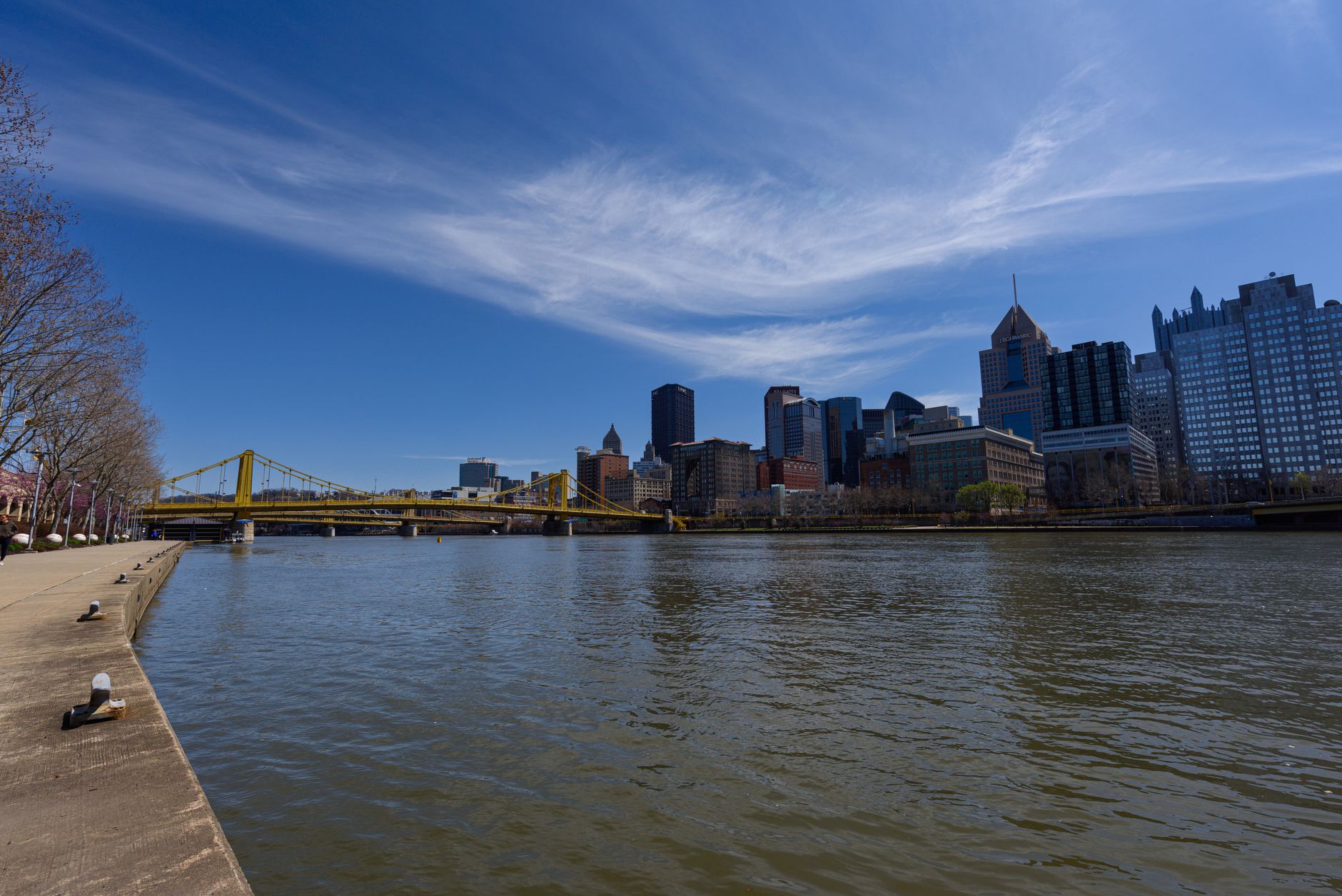
Instead, he came to the Strip District headquarters of the
Society for Contemporary Craft (SCC) where one of the field's most celebrated practitioners, Carol Barton, was offering a class in pop-ups.
That happy outcome illustrates the international drawing power of SCC, which was founded in 1971 as a comprehensive center for craft instruction, exhibition and appreciation. Don't bother looking for a similar facility in Cleveland, San Diego, Rochester, Buffalo, Indianapolis or most American metropolises, says Janet McCall, SCC's interim executive director.
"A lot of Pittsburghers don't know that we're one of only about a dozen such organizations in the country with an exclusive focus on contemporary craft — not just one particular form like glass or wood, but showing work across all craft media. And we're one of the oldest such organizations."
What's more, SCC is riding the wave of renewed interest in crafts as well as concerted development in the Strip that has included the location or relocation of such other institutions as the
Pittsburgh Opera, the
Pittsburgh Ballet Theatre, the
Senator John Heinz History Center and the
Open Stage Theatre, giving the Strip a cultural component to complement the thriving restaurant and nightlife scene.
"When I came in '95," McCall says, "there was a lot of concern about the future of craft, the field itself, and where it was going. We worried about the idea of the separation between art and craft. Some artists who were working with craft materials didn't want to be identified as craft artists in any way. Many universities had eliminated their craft programs for more conceptual studio programs.
"Maybe six years ago, we began seeing young people, really top art students, finding their way back into craft media. Artists still are going into programs that are more conceptually based, but they're bringing with them the passion for the materials."
The Indefatigable Betty RockwellSCC owes much of its success to the dedication and energy of its founder, Elizabeth Rockwell Raphael — yes, those Rockwells — whose approach was, at the same time, visionary and pragmatic. The art world attracted her as far back as the 1940s when she opened Outlines, a salon of sorts that featured visual and performing artists, perhaps a first for Pittsburgh. It was ahead of its time, or at least misplaced in the war years, and failed, but the indefatigable Raphael had seen what the arts in Pittsburgh could become.
In 1971, when two college students opened a crafts gallery in Verona to celebrate the town's centennial, they pitched a number of philanthropists for support. Among them was Raphael, who saw an opportunity to implement her vision anew. After the students trundled back to school, she took over the gallery, christened it The Store for Arts and Crafts and People-Made Things and set about making it nationally known. She advertised her little outpost in the
New York Times, promising prospective visitors free transportation to and from Pittsburgh's airport if they came to Verona. Never mind that free transportation turned out to be rides in the family station wagon with Raphael's daughters Cathy, Alexandra and Margaret as chauffeurs. Betty Rockwell built it, and they came.
Her commitment didn't end there. Her shop was structured as a commercial venture; when it fell short of break-even, Raphael made up the difference. She also found innovative ways to advance the careers of struggling artists.
"Often times she would see great work that she thought most people couldn't afford, yet she wanted to support the artist," McCall says. "So she would buy the work and sell it at a lower price, personally underwriting the difference to help that artist get a start."
High-energy HubIllness forced Raphael to step away in the 1980s, but by then, SCC had its current name and a new nonprofit structure, and it was ready to move to its attractive, airy new headquarters where it operates as a high-energy hub of crafts activities. Beyond its gallery, SCC offers:
Exhibitions. Each year, the center mounts three to four exhibitions that reflect SCC's commitment to one or more its four foundation themes: art and the environment, crossing cultural boundaries, the urban experience and artists in process. Recent shows included
Stop Asking/We Exist: 25 African-American Craft Artists, as well as exhibitions featuring the work of Korean artists and Puerto Rican ceramicists. For its environmental thrust, SCC staged a show built around the unusual tree-bark sculptures of Dorothy Gill Barnes.
One Mellon Center Satellite. Opened in 1990, the mini-center in the T station offers a daily art experience for thousands of Downtown workers and visitors.
"The opportunity provided there was not only foot traffic with all the people using the subway, but it was also a way we could showcase local and regional artists working at a very high level," McCall says. "While our focus always has been on the best work that's being produced anywhere, we certainly don't want to exclude local and regional artists."
Traveling Exhibitions. At any give time, Director of Exhibitions Kate Lyden and Exhibitions Coordinator Kati Fishbein have a handful of exhibits touring the country or in preparation for the circuit. On the road now are Transformation 6, a glass show bound for Western Washington University, and Nick Cave's fiber wall hangings headed for Illinois. Not only do the road shows bring in much-needed revenue, but they also serve as effective ambassadors for Pittsburgh.
Education. In addition to on-site classes and a "Drop-in Studio" where families get hands-on with crafts, SCC partners each year with a Pittsburgh public school, sponsoring an artist who instructs pupils in such crafts as quilting and works with faculty to insert related material throughout the curriculum.
Community Involvement. Because it's located in the city's produce center, SCC makes a particular effort to offer shows based on food and its role in American life. Recently featured was South Side artist Matt Eskuche's musing on throwaway culture as embodied in blown glass replicas of soft drink bottles surrounded by fast food containers and wrappers retrieved from places you don't want to know about.
Called
The United States of America: Life, Liberty and the Pursuit of Crappiness, the exhibition was as realistic as its title was unsubtle, so realistic, in fact, that one patron of the arts tried to make off with one of the dented metal trash cans that punctuated the installation. That may have been carrying community involvement to an unprecedented level.
A clear mandate for the futurePerhaps the most remarkable aspect of SCC is that it provides all these services on a shoestring budget of about $750,000. While larger cultural organizations shake the tin cup year-round, SCC relies on a single annual fund-raiser to complement income from memberships, commissions, traveling shows, retail sales and a modest fund at the
Pittsburgh Foundation. Though the temptation to do so must be strong, SCC does not charge admission fees. This allows you to visit their outstanding gift shop for free anytime.
"Our motto always has been moderate, sustainable growth over time," McCall says. "We want to be nimble, flexible and lean but still be able to have impact."
For the future, McCall sees SCC as a player of growing importance in the burgeoning Strip as well as a continuing magnet for even more significant cultural tourism. Other institutions may be bigger, but none has a clearer mandate.
"We have been lucky to inherit the vision and high standards that Betty Raphael set in the early days of the organization," McCall says. "I feel a lot of responsibility to her. She's no longer living, but what she did for the field was so important that I want to keep that going."
Captions: Janet McCall with a work by Naomi Schliesman; sculptures by, in order, Jae Yong Kim, Andrea Keys, and Jeremy Brooks.
Photographs copyright Brian Cohen