Friday, March 12, 2010 | Follow Us:
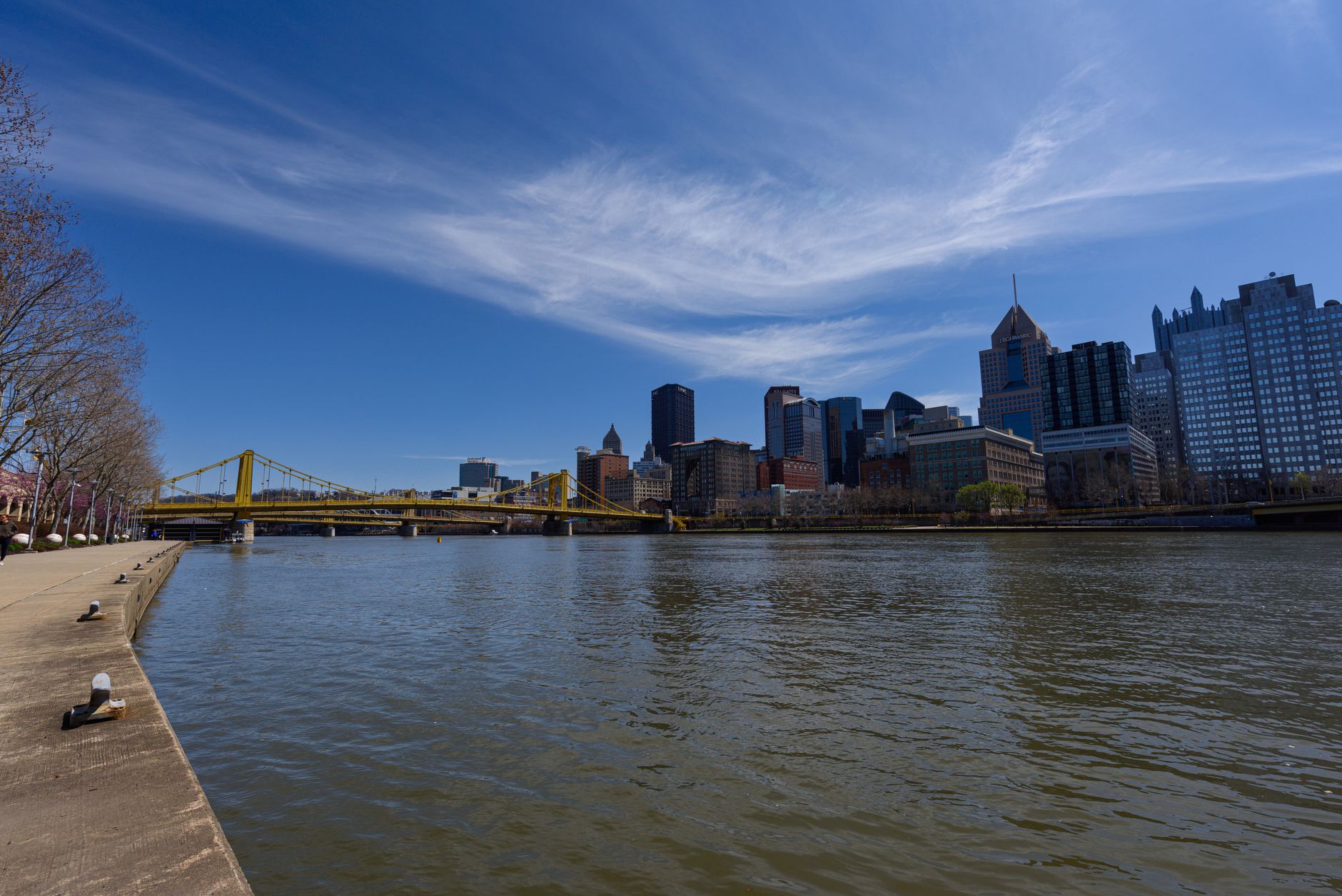
The Hilton, Downtown.  Photograph by Brian Cohen
The Hilton, Downtown. Photograph by Brian Cohen

Features

The Next Act for the Pittsburgh Playhouse

Related Images

Related Tags

Overture

First, the plot:

Once upon a time, In the early 20th century, D.H. Lawrence was a naughty man. As a brash young student, he studied under Ernest Weekley, a professor at the University of Nottingham. Weekley introduced Lawrence to his wife, Frieda. Only a few weeks later, Frieda ran off with Lawrence, abandoning her marriage and children. They stayed married until Lawrence’s death in 1930. By then, they had accrued a ranch in New Mexico, so Frieda moved there. On Independence Day weekend, 1939, Frieda’s estranged son showed up and stayed for a few days. After two decades apart, what did they talk about? What did this son think of her young new lover? And how did the weekend end?

Thom Thomas asked these very same questions. The 68-year-old Angelino has retired from acting and TV-writing, but he has never given up playwriting. Originally from Washington County, a veteran of New York and Hollywood, Thomas has long loved the works of D.H. Lawrence, and this obscure weekend inspired him to write A Moon to Dance By, a drama that’s taken nearly a decade to complete, and makes its local premiere at the Pittsburgh Playhouse Rep Theatre this month. Meticulously researched, every word revised, A Moon to Dance By is a labor of love.

But there’s more to Moon than the story itself: Fifty years ago, Thomas became an actor for the first time in the Hamlet Street Theatre. Today, the Hamlet has turned into the Playhouse, and his play will be mounted on the exact same stage.

Act I: The Little Theatre That Could

The Pittsburgh Playhouse, now operated by Point Park University, was never actually built – rather, it was gradually pieced together from other buildings. Part of the Playhouse used to be a synagogue; another piece, a German social club, and where the box office now stands was once a Victorian mansion. Walls were torn down, corridors were sutured between them, until the Playhouse became a single structure. The Playhouse started as an organization in 1936; it settled into its current location (then the Hamlet Street Theatre) in 1938 and was absorbed into Point Park College in 1969. Today it boasts three different stages, rehearsal rooms, a massive costume shop, and a café. A shuttle runs regularly to and from Point Park’s main campus Downtown.

“What isn’t this building?” quips Ronald Allan-Lindblom, the Playhouse’s artistic director since 1998. “Nothing in the Playhouse was designed for the function it’s being used for. For example, the Rockwell has one of the strangest acoustics of any building. We’ve put a lot of improvements into it. It’s a building that requires constant care.”

Indeed it does: During his tenure, Point Park University has installed a $600,000 lighting system and a $800,000 roof. Still, the structure is a little rough around the edges; while the lobbies and three auditoria are clean and inviting, the stairwells and upstairs rooms are cluttered with old computers and besmirched with years of wear. The boiler in the basement is a veritable antique; the ceilings are shaped into odd angles. Allan-Lindblom’s own office looks like a beatnik’s garret, with its diagonal ceilings and tiny windows; due to fire-codes, he can’t even use the room for rehearsal or voice-coaching. Allan-Lindblom describes the old-fashioned rigging system in the Rauh Theatre as a “hemp house.”

But the building has birthed so many great artists – from Gene Kelly to C.S.I.’s Melina Kanakaredes. “It was one of the first real regional theatres in the United States.” Allan-Lindblom says proudly. “Literally thousands of people’s careers started and return to this building.”

Among them, Thom Thomas’.

Act II: The Journey Home
Thomas doesn’t have a lot of family left in Pittsburgh, but his legacy is felt everywhere: After graduating from Point Park, he became a professor, then head of the department. He served as artistic director for several companies (including the Civic Light Opera) before taking on the Big Apple. A writing gig for “Hill Street Blues” drew him to Los Angeles, where he has lived ever since.

But Thomas’ heart is still in live theatre. “I love writing for theatre,” Thomas said in a recent phone interview, “because in theatre the playwright’s word is the final word. When you write something for television, they sometimes don’t even notify you when it’s going to air. And you don’t even recognize what you’ve written. But your name is still on there.”

Thomas has researched and revised the script since 2000, using the Actors’ Studio in New York to find performers to read scenes aloud, earning a staged reading at Circle in the Square Theatre and Primary Stages and a world premiere production at the World Harmony Theatre in Indiana. But the Playhouse’s mounting of Moon will beat them all: Its all-star cast includes the legendary Jane Alexander, with direction by the acclaimed, Tony-award winning Edwin Sherin.

“I’m ecstatic,” says Thomas. His only concern, after so many years in southern California, is the winter weather.

Act III: The Next Stage
Beloved as the Playhouse is, the aging, ad hoc facility won’t satisfy the Point Park Conservatory for long. In a way, Thomas’ return to the Playhouse has come just in time, because the old “hemp-house” will likely be packing up soon.

“I, like a lot of people, have a sentimental attachment,” says Allan-Lindblom, “but the truth is that we’ve outgrown this building. It’s not about the building. It’s about the people.”

Managing Director David Vinski agrees. “As you walk through the building, there’s a lot of charm, a lot of memories,” he says, “but if you’re realistic about it, you’re asking yourself: How old is old?”

The next stop for the Playhouse is Point Park’s Academic Village, a massive, $4-million Downtown facility slated for construction in the next 5-7 years. Within the decade, Allan-Lindblom expects the Playhouse to become a state-of-the-art show-space, comfortably situated between the Cultural District and the Golden Triangle. Plans for the $139 million Playhouse include a thrust theatre, a studio-theatre, a 500-seat proscenium theatre, 10,000 sq. ft. of workshop and rehearsal rooms, retail spaces and dormitories. Not to mention below-grade parking.

“Our move Downtown is what’s going to save the Pittsburgh Playhouse,” says Allan-Lindblom.

NOTE: Moon to Dance By premieres Feb. 6 at the Playhouse Rep Theatre.

To receive Pop City weekly, click here.
Captions: The Playhouse; (l to r) Ronald Allan-Lindblom with Playhouse colleagues Scott Weston, Chris Hayes and Michael Essad; navigating the building; David Vinsky

Photographs copyright Brian Cohen