The art of transforming Lawrenceville
Abby Mendelson |
Wednesday, April 26, 2006
When you sit in the decidedly funky Perk Me Up Coffee House, 4407
Butler Street, and catch the Lawrenceville buzz – all those artists,
galleries, design shops -- it seems that nothing symbolizes the
neighborhood’s remarkable transformation as much as Art All Night.
While this year’s incarnation – the ninth, April 29-30, 3618 Penn
Avenue – is certain to draw great crowds, it’ll be hard to top last
year’s blow-out, when more than 7,000 people packed the old Heppenstall
steel plant to mix and mingle with nearly 900 artists, all of whom
brought one piece, no jury, no fee, no censorship. No rules? “This is a
place where creativity thrives,” comments the non-profit Lawrenceville
Corporation’s Pam Devereux.
Now,
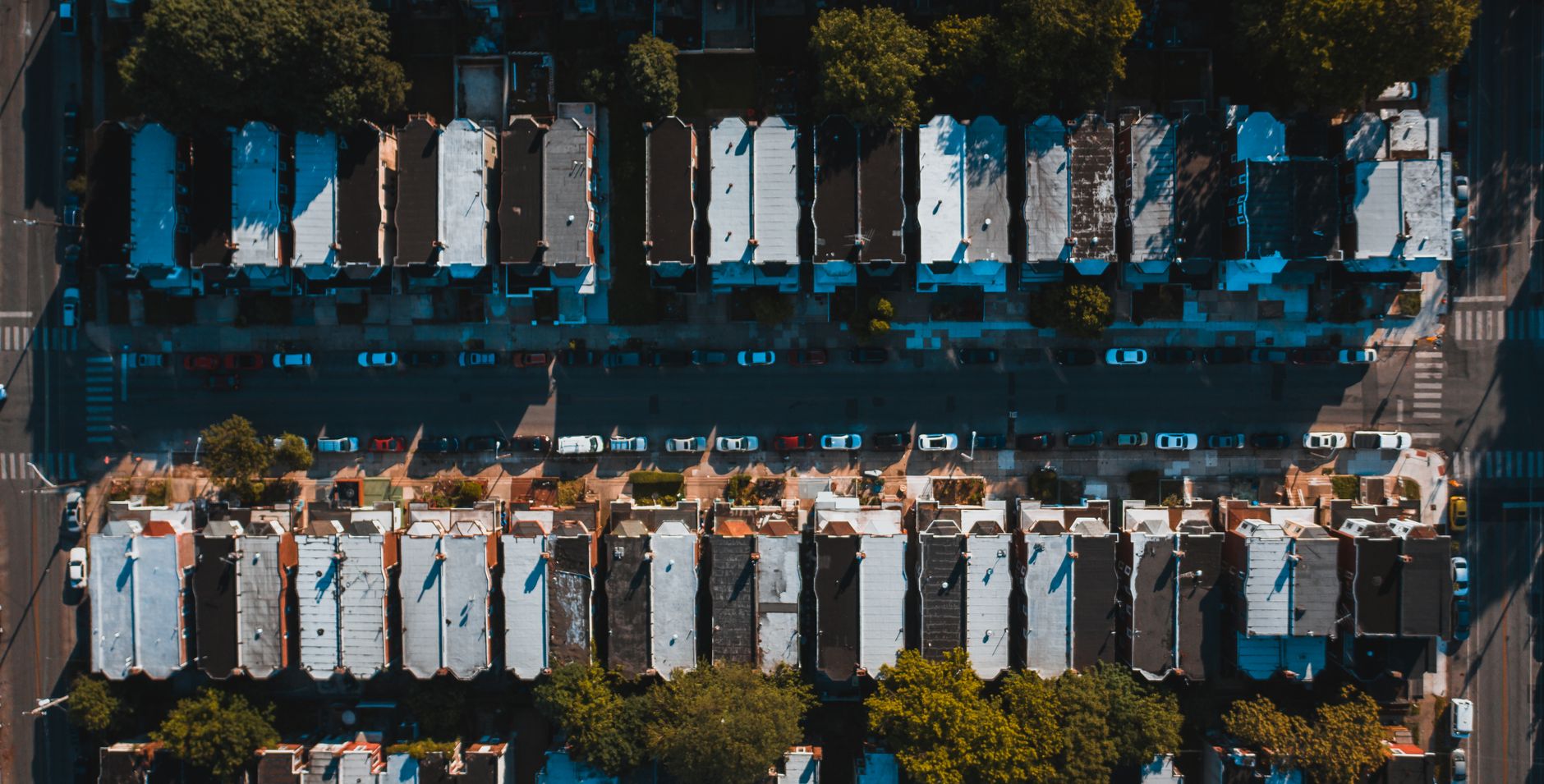
maybe. A riverside village named and laid out in 1814 by William
Barclay Foster (composer Stephen’s dad), and annexed by the city some
54 years later, Lawrenceville became home to industrial works and the
standard Pittsburgh European stewpot. But when the mills closed, and
the population sagged, so did Lawrenceville, losing focus and energy.
Until this new century Lawrenceville seemed little more than an
Allegheny River-side necklace of three wards uncomfortably strung
together, aging brick steeped in sleepy, post-industrial torpor.
“Artists see beyond that,” Devereux says. “They see raw material,
potential. Now there’s real optimism here, a real commitment to making
it better. People really love this place. These are grass roots that
keep on growing.”
Branding the 'hood
One catalyst has been the 16:62 Design Zone,
the Lawrenceville Corporation’s proclamation that the 46-block marathon
along Penn and Butler is Pittsburgh's interior design district -- home
and office design, décor, and furnishings. Extending from the 16th
Street Bridge in The Strip to the 62nd Street Bridge in Lawrenceville,
the initiative, launched six years ago, now includes more than 100
shops, galleries, studios, and professional services firms.
“There’s a sense of place here,” offers Jeff Gordon, part of
16:62 and co-owner of Who New?, 5156 Butler, dedicated to what Gordon
calls mid-century furniture and home accessories -- fuzzy gold chairs,
lamps, tables, all in gloriously dreadful taste. “You can walk to a
coffee shop, bakery, art gallery. It has a human scale – like a
European village. More than that, individuals put their hearts and
souls into their businesses. It’s beyond economics, it’s people
investing in the community.”
A former circus clown, Gordon moved back to his native Pittsburgh
four years ago, and has been on Butler Street some 14 months. “Artists
can afford to live here,” he says. “Artists are owners. They help brand
the neighborhood with a hip sensibility.”
Hip sensibility doesn’t seem quite right when talking about Mary Coleman, a 43rd
Street weaver, but the artist part fits nicely. A transplant from
Greene County, “I wanted to be able to do my weaving in my home and
sell in my home,” she says of her move here a dozen years ago. “I
stumbled on Lawrenceville.”
A weaver for the past quarter-century, she’s crafted some 3,000
pieces –and sold every one of them, all across the country, in London
and Paris as well. Enjoying Lawrenceville’s no-nonsense look, “I love
brick,” she says, “the very ornate to the pleasantly plain.
Lawrenceville’s just right. But it keeps changing, too. With the
galleries opening (including her own, the Gallery on 43rd
Street, dedicated entirely to Western Pennsylvania artists), people are
moving in. People with children. People are staying.” She pauses. “I
hope I can live here the rest of my life.”
“I’m not leaving,” John Morris agrees, standing in the doorway of his Digging Pitt Gallery, 4417 Butler Street. “I’m here for the duration.”
A transplant like Mary Coleman, except from New York City, Morris,
whose own abstract drawings reside in such prestigious collections as
MOMA, the Whitney, and the Guggenheim, wandered west seeking affordable
space to create an art archive for paintings, drawings, prints, and
photographs. He found it a year ago in Lawrenceville. “The cost was
right,” he says.
Getting it
So was a town that boasts the
Carnegie International, the Warhol, the Mattress Factory, et al. “I
don’t think people in Pittsburgh realize what they have here,” he says.
“People from out of town see something that local people don’t.”
One key group of visionaries, Morris says, are Carnegie Mellon
University grads staying, or returning. “It’s a trend,” he says.
“People who would have left have taken a second look.”
One of them is Elizabeth Monoian, New Yorker, East Villager. First
finding Pittsburgh as a CMU grad student, ‘97-’00, by ‘03 she was back.
Tired of visiting her stuff in a Long Island City storage unit, of
paying exorbitant New York prices for tiny New York spaces, she
followed Horace Greeley’s advice and headed this-a-way, looking for
work space, artist-in-residence space (her second floor is currently
booked for the next two years), exhibition space, work space. With her
adopted city at her feet, she chose Lawrenceville, “a really beautiful,
inspiring neighborhood,” she says. “It was the right texture. And” –
again -- “the price was right.”
Texture,
Monoian says, means “factories, row houses, brick, steel, rust. There’s
a real color to Lawrenceville that was good for ‘I want to feel,’” her
performance video that continues to play in such faraway places as
Russia, Italy, and Serbia. “There’s a synergy here,” she adds.
“Something very exciting is happening.”
Nothing less than her own Hatfield Street Galleries, three artist-gallerians who, serendipitously finding themselves way, way off the beaten path, formed a collaborative trio of galleries, Blue Collar Gallery, Musée de Monoian,
Trinity Gallery, 4719-4747 Hatfield Street. “The three of us work well
very together,” she says. “Talk about synergy. That just happened by
accident.”
Such accidents are not lost on the locals. In EveryOne An Artist,
4128 Butler, Pittsburgh’s only gallery devoted to artists with
disabilities, Kate Bayer sees “Lawrenceville sitting in the middle of
an exploding art happening. Inclusion is at the heart of it. Artists
are important – but it’s not just about them. It’s about everybody.
Young, old, professional, working class, multi-generational, transient
– Lawrenceville’s where all people fit in. It’s a pretty cool place.”
Award-winning writer Abby Mendelson is the author of numerous books, including The Pittsburgh Steelers Official History and Pittsburgh: A Place in Time, a collection of neighborhood profiles available from The Local History Company.
photo captions:
billboard
Perk Me Up Coffee House
Digging Pitt Gallery
Elizabeth Monoian
all photographs copyrighted by Jonathan Greene