Tuesday, March 16, 2010 | Follow Us:
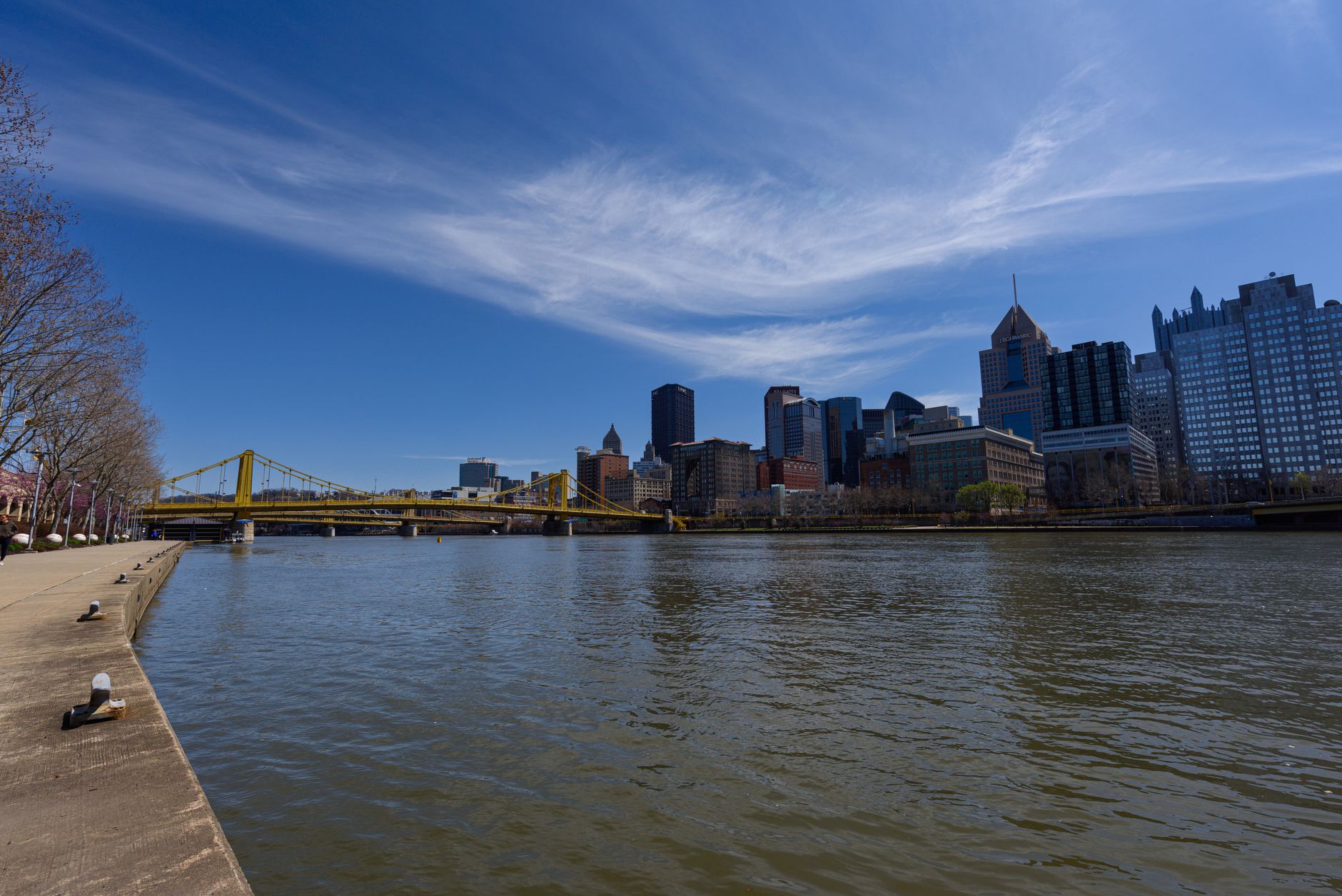
The Hilton, Downtown.  Photograph by Brian Cohen
The Hilton, Downtown. Photograph by Brian Cohen

Features

Changemaker: Charlie Humphrey

They’re all ages, shapes, sizes, and colors; featured without names or titles, testifying to the importance of the arts.

And they hit the Internet at light speed.

“Art is what makes us human,” one says.

Faced with enormous – some would say catastrophic – Pennsylvania budget cuts for arts organizations, Charlie Humphrey’s twin organizations – Pittsburgh Filmmakers and Pittsburgh Center for the Arts – hit the ground running. Producing the video Arts and Citizenship, Humphrey and his team gathered a series of highly effective, unrehearsed testimonials about what the arts mean.

“It’s all a part of what makes life worthwhile for me,” one says.

“The arts are an overall part of citizenship, just as education is,” adds another.

“It’s part of promoting America,” says a third.  “It’s part of promoting everything that we’re about. It’s part of making sure that we’re a cultured people.”

The initial idea for the four-and-a-half-minute video came from the Children’s Museum’s Jane Werner, who saw something similar in Philadelphia. Adapting it, Humphrey did not want to make it a Pittsburgh plea per se, instead preferring something more universal. “There’s so much time and effort put into fundraising and advocacy,” he says, “we wanted to get more on the emotional, visceral side. We wanted to make the human case.”

And it does. Proof positive is that the video is everywhere – Greater Pittsburgh Arts Council, Facebook, linked and forwarded throughout Pittsburgh and far beyond.
 
Virtually overnight, Humphrey heard from Alaska, Colorado, New York, California, and Washington. “This is really great,” people said. “Can we use it?”

“Of course,” he shrugged.

Breaking the Mold
Taking a sunny, late spring morning to reflect on nearly 30 years in Pittsburgh arts, Humphrey sits in his crowded corner office. Dressed in his trademark blue jeans, with a white hoodie and long, unruly hair, Humphrey, with the air of a distracted college professor, is the farthest thing imaginable from a man responsible for multiple programs and multi-million-dollar budgets.

Descended from the Westinghouse Air Brake Humphreys, he also has McClintick-Marshall Steel and Fisher Scientific blood in his veins. Humphrey went to college in Walla Walla, Washington, studied philosophy, dabbled in radio, then returned home.  

Taking a job at WQED-FM in 1981, he spent four years working for the legendary Ceci Sommers, learning the not-for-profit world from the inside. Producing radio shows and working fundraising, “I cut my teeth at QED,” Humphrey recalls. “Budgeting. Financials. Asking people for money.” A management training program at the University of North Carolina at Chapel Hill, “changed my life,” he says.

Thus equipped, Humphrey began to swim in local – and national – arts channels. Serving on boards, working with organizations from both sides, “I looked under the hood,” Humphrey says. “I got to know how not-for-profits operate.” He pauses. “It’s not rocket science. So much of it is like dodge ball. Get out of the way and avoid being whacked.”

Yes, but he’s done much more than that. Humphrey was recruited for every organization precisely because they wanted him active and involved. At Filmmakers, for example, which he joined in ’92 after stints in publishing and advertising, Humphrey’s impact was immediate and powerful. Under his leadership, the long-time Melwood Street facility greatly expanded, and the group added two theaters, the Regent Square and the Harris. The fundraising bill for those projects alone was well in excess of $5 million.

A dozen years later, in 2004, when the oft-troubled Center for the Arts seemed on the brink of extinction, the board asked Humphrey for help. Not only writing the recovery plan, he also raised the money necessary for survival. Currently joined at the hip, the two organizations work well in tandem – an outcome no one would have predicted except Humphrey himself.

As if there weren’t enough on his plate, when the Pittsburgh Glass Center was in dire straits, the founders asked Humphrey for help as well. After writing another recovery plan, he raised the money to keep the center open.

Typically, Humphrey refuses credit for his efforts. “I work with such amazing people,” he says. “Most of them were already there when I came. In many ways my job is getting out of the way so people can do their jobs. In fact, the less I’m around, the more they get done.

“The days I feel really good about myself,” he adds, “are days when I’m not reactive.” To wit, when his organizations are moving forward, making progress, and he can think long-term – and big bucks. “That’s what I do for a living,” he says. “I try to get stuff for free.”

Mellow? No.
But his humble attitude masks four Humphrey traits:

A powerful intelligence that can assimilate much information all at once;

Nearly three decades of hard-won arts experience;

A consummate ability to focus on the task at hand, including all the myriad details;

A feistiness that has him ready to do battle over artistic, aesthetic, or organizational goals.

“I can flame on,” Humphrey smiles impishly. “I like to agitate at various times.” As people who’ve been dusted by the impatient, imperious Humphrey in confrontations both private and public well know, “I don’t do mellow,” he says.

Perhaps not, but it’s not 1981 anymore, when the long, lean, brash kid muscled his way into QED and served up a frisson of smarts and wit on Sunday morning arts radio. If Humphrey hasn’t exactly mellowed, he’s assimilated the great Pittsburgh truism, that the town is a marathon, not a sprint. “We’re in it for the long haul,” he agrees. “There’s always a crisis. But we’re in it for the long haul.”

While he’s no alarmist, Humphrey adds, “it’s tough going for everybody. If state funding for the arts gets compromised, things are going to get a lot worse.” Then back to the burden of his arts advocacy video: “It’s hugely important,” he says. “It’s a lifeboat issue. It’s not an amenity. It’s not a luxury. It’s an absolute necessity.”

That said, he remains upbeat – about the cause and about the town. “Pittsburgh,” he smiles, “is no longer being run by grown-ups.” Meaning that the kids have come of age; the old line, the old guard, are no longer in charge. Former interns like Humphrey now run things. “Pittsburgh’s gotten denser,” he adds. “There’s a more diverse, richer arts climate now than when I came here. There’s a real depth to the cultural community. It’s a great place to make art, to experience art, or, in my place, to be an enabler. You can make a difference here.”

Given all that he envisions, and all that he’s accomplished, including that ‘Net-shaking video that might just change some minds, how does Humphrey see his role as a changemaker? “I’ve been present,” he demurs. “But I didn’t change things. I just happened to be there.

“It’s really nice to be considered a changemaker,” Humphrey adds distractedly. “But I’m just a participant. I work in a very collaborative environment.” Then a classic, self-deprecating Humphrey shrug. “Because if it were all up to me, it’d be a disaster.”

To receive Pop City weekly, click here.
Photographs copyright Brian Cohen