| Follow Us:
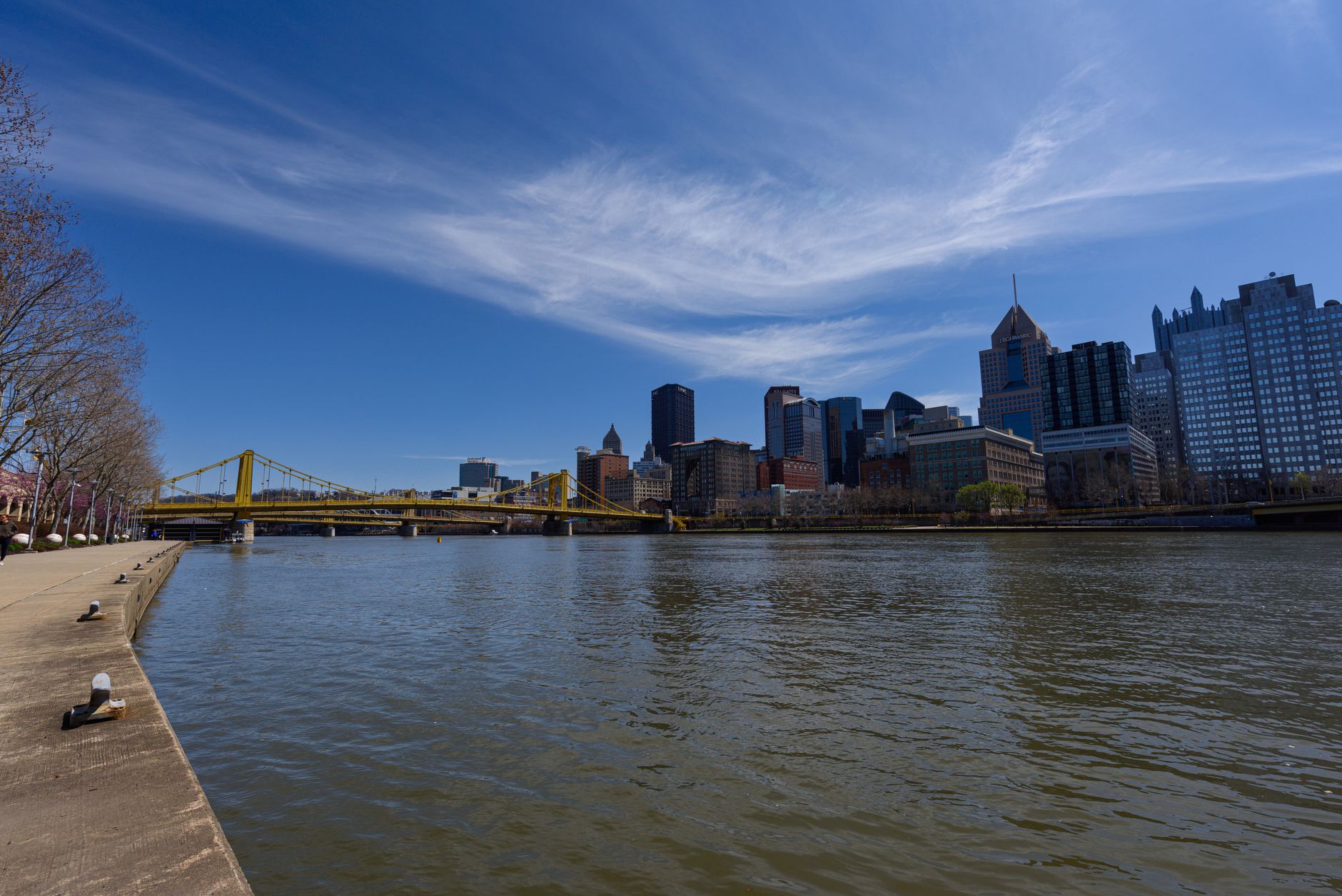
At The David L. Lawrence Convention Center.  Photograph by Brian Cohen
At The David L. Lawrence Convention Center. Photograph by Brian Cohen | Show Photo

Features

Touring the Hill District

Related Images

Terri Baltimore’s wearing her tour guide hat this morning. Bright and lively and caring, she works at Hill House, works wonderfully well with kids and the arts and education, a citizen and patriot in the best sense of the words. But this morning, as she’s done for 15 years, she’s ferrying visitors around the Hill, lovers and other strangers, showing off something old, something new, showing off the Hill Phoenix. The Hill Ascendant.

An auslander from East Liberty, Baltimore first came to Hill House in 1977 as an Urban League student intern; after Duquesne University the Wilkinsburg resident came back. Now vice president of neighborhood development, her tours are “an opportunity to teach people a respectful way to interact with the community,” she says. “I love the Hill. I love the resilience of the people. I want people to see the beauty of this very special place.”

A big hunk of land between Fifth Avenue and Bigelow Boulevard, stuffed between business-heavy Downtown and university-laden Oakland, the Hill has been mined for coal and has hosted such in-house piecework as stogie rolling. Pittsburgh’s cradle of jazz, in the era of apartheid baseball it was home to Greenlee Field, the nation’s first African-American developed, owned, and operated baseball park, and the perennial champion Pittsburgh Crawfords.

Unloved, save by the people who lived there, left to suffer the indignities of benign neglect, whole sections were allowed to decay – or bulldozed out of existence. Once a neighborhood that people went through, the Hill was transformed overnight into one that people – willingly or instinctively – went around.

Start Here
We begin this beautiful, startlingly sunny morning, with white clouds scudding across a deep blue sky, at Hill House, a long, low Modernist building on Centre Avenue. The inheritor of the century-old settlement house movement, “because of Hill House,” says ebullient Executive Director Evan Frazier, “there are young people participating in science, arts, and recreation when they otherwise would not have been. There are high school graduates choosing career paths instead of the street. There are young, previously absent fathers playing an active role in their children's lives. There are single moms affording safe, high-quality childcare. And there are seniors who have warm winters and full cupboards.”

Freedom Corner, Centre Avenue and Crawford Street, stands as a memorial for community efforts. So named in 2002, with a celebratory relief sculpture and the names of such Hill leaders as David Epperson, Byrd Brown, Frank Bolden, Jake and Margaret Milliones, and Hazel Garland carved in stone, Freedom Corner faces St. Benedict the Moor and, below it, Mellon Arena, its burnished silver dome still a bone in the neighborhood’s throat.

As Baltimore points out, in the 1950s Pittsburgh redevelopment demolished the Lower Hill for the Arena – while promises of new, affordable housing were never kept, and more than 8,000 residents were forced to relocate. “People talk about what it was to lose such valuable parts of their lives,” Baltimore says. “There are family names, businesses, and stores buried in that ground.”

Views To Die For
Moving past the new housing at Bedford Hill and Crawford Square, Baltimore stops at the Roberts and Bedford historic marker standing before the house of August Wilson, the two-time Pulitzer winner who was the son of a German baker and an African-American cleaning woman. With an effort to fix up the derelict building, Baltimore points out that the landmark could become a writer’s residence, with the adjacent vacant lot a visitors’ center.

A few blocks north Baltimore stops at Cliff Street, site of the famous James Parton quote about Pittsburgh, “hell with the lid off.”  (A writer for The Atlantic, he was admiring the brawny industrial might of the Allegheny River.) Old and new houses stand chockablock, check by jowl.  However, Baltimore gestures, “the views are spectacular.” From here, we can see a good 20 miles up the Allegheny and down the Ohio Rivers. “This is the Hill that nobody thinks about,” she says. “We want people to know this place, to enjoy its beauty. It’s a myth that public space is a luxury. We want the city to work for everybody.”

Considering a network of green spaces, where people can take their exercise and their ease, admire the views, and generally feel good about going green, “we’re re-creating space that has been here all the time,” Baltimore adds. “We’re not inventing something. We’re bringing it back to life.” She pauses. “We know how to polish our own gem.”

From the nearby Williams Park Reservoir, with its 360 views of the city, we see the stately Cathedral of Learning, the dark-shadowed pickets of Downtown, the hump-backed West End Bridge, even the VA Hospital slicing along the hilltop, picking up the late-morning sun. “Isn’t this an amazing view?” she asks. “This is what we want people to know.”

A few blocks – and half-a-world – away, Minersville Cemetery reminds us that the Hill remains honeycombed with coal mines (and underground rivers). As a one-time way station for immigrant groups of all stripes, ethnic Germans to Eastern European Jews, immigrants built, then moved on. Abandoning their reliquary, there are graveyards, deconsecrated synagogues, and schools dotting the landscape, the bones of the Hill. Here, German miners of the last century left their departed. Nearby, Jews built 24 synagogues; while most are gone, some have been re-used (one even by Hill House.)

At The Legacy, new Centre Avenue apartments, 17 local artists were commissioned to dress up the building.  Decked out with classic Teenie Harris photos (Duke Ellington, Billy Strayhorn), there are quilts, found objects, paintings, and the names of jazz greats carved on the Wylie Avenue side, where the building faces the former Crawford Grille site. “We have great respect for the history of the community,” Baltimore says. “Jazz is a big part of the Hill’s history.” As at Freedom Corner, George Benson, Billy Eckstine, Errol Garner, Ahmad Jamal, Art Blakey, and Walt Harper celebrate the past and inspire the future. Like the neighborhood itself, Baltimore says, “something transformative happens when you walk through this building.”
Abby Mendelson’s latest book, Ghost Dancer, a collection of short stories, is available at amazon and bn.com.

Captions:

Terry Baltimore at Freedom Corner

New development

Evan Frazier at Hill House

Sign at August Wilson's house

Minersville Cemetery

All photographs copyright Brian Cohen


Share this page
0
Email
Print