Wednesday, March 17, 2010 | Follow Us:
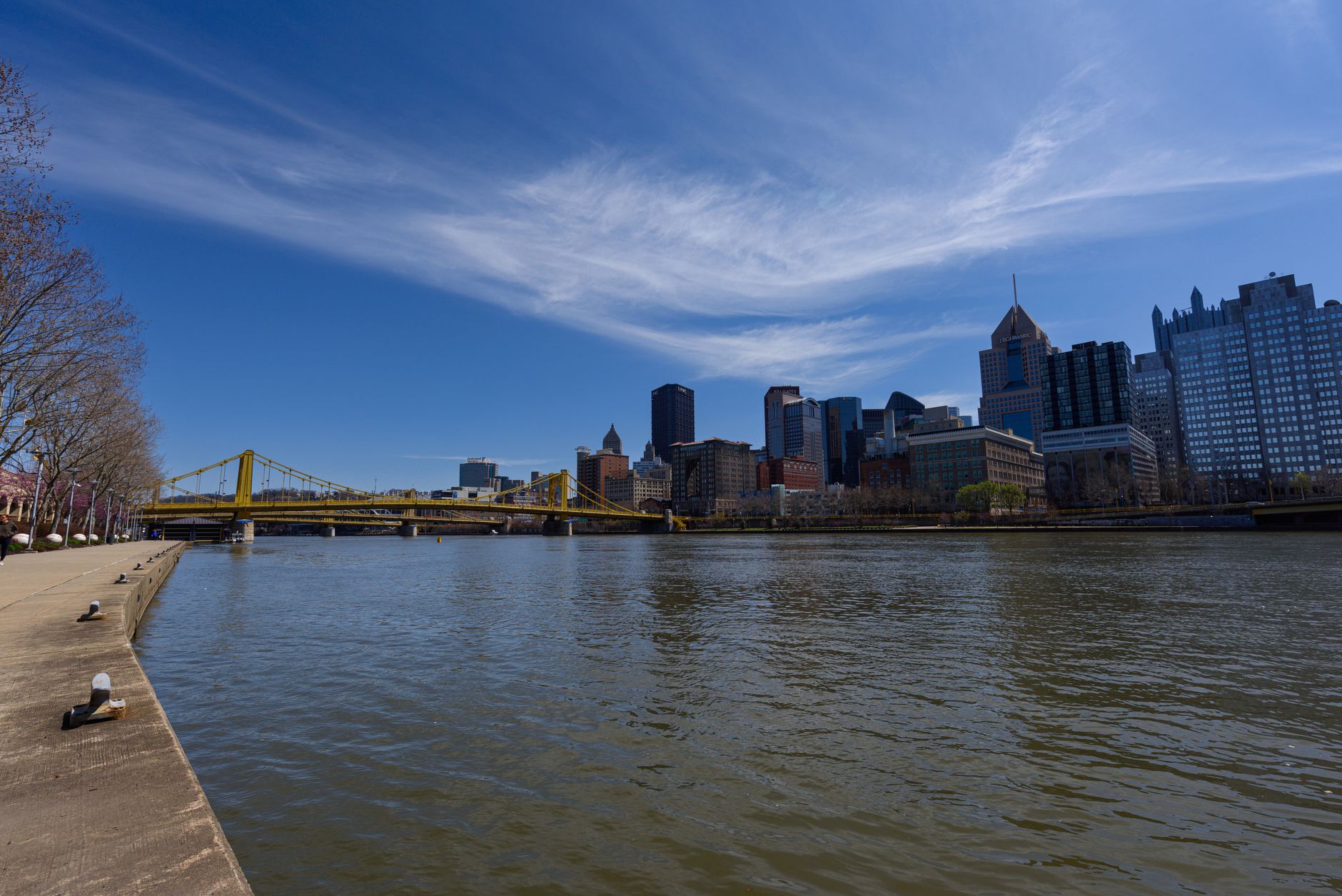
The Baltimore and Ohio Rail Bridge Reflected in the Monongahela River.  Photograph Brian Cohen
The Baltimore and Ohio Rail Bridge Reflected in the Monongahela River. Photograph Brian Cohen

Features

Living the Green Life

For Rebecca Flora, living green – conserving energy, reducing pollutants, using environmentally friendly products, actively promoting energy-wise public policies -- came naturally. “The whole notion of being green has always been with me,” she says, “and has evolved over time. I grew up in the Adirondacks, close to nature. In fact, I thought I’d be a forest ranger. But I chose to protect nature in other ways.”

The epiphany to live green? “It was never one big moment for me,” she says.  Instead, it’s expanded as I’ve become more and more informed. Now, I think, live, and breathe it all that time.”

As executive director of Pittsburgh’s Green Building Alliance, Flora has to. Yet, she adds, “I very much believe in walking my talk. So I try to do as much as I can at home. I try to be a good role model for my kids.”

So, living on the South Side, she walks, bikes, or takes mass transit to work, also on the South Side. Saving all that energy, keeping auto pollutants out of the air, “is pretty important,” she says.

At home -- for most people, their single biggest energy user and polluter -- for Flora et famille, it’s a townhome development, clustered high-density infill housing, which minimizes energy consumption. Buying her energy through community green power, Flora uses green cleaning supplies, fluorescent light bulbs, new water filters twice a year. “Those are the biggies,” she says.

There’s also buying locally grown foods -- which saves on shipping energy and its concomitant pollution -- organic whenever possible. “Of course, we recycle everything,” she says. “I’d like to do composting,” she sighs, “but I can only take on so much.”

For his part, architect Alan Weiskopf, of Perfido Weiskopf Wagstaff Goettel Architects, counsels common sense. While there are no solar panels on the roof of his Shadyside manse -- not yet, anyway -- he’s doing exactly what he’s done for the quarter-century he’s been in Pittsburgh. Eschewing air conditioning, for example – “for the 30 days a year you need it in Pittsburgh, it doesn’t warrant putting it in and using it,” he says – Weiskopf and family dress appropriately and turn on fans.

Choosing a place to live, he says, “based on efficiency, public transit, and convenience,” he lives near the busway, hops the 40-seat limo for Downtown, and encourages his employees to do the same. Living in the city, Weiskopf tries to walk everywhere for other services. “Restaurants, shopping, recreation – we get there on foot,” he says. “It’s as simple as that. It’s not revolutionary. It’s not rocket science. It’s common sense. Live close to where you work. Walk where you can. Plan appropriately.”

Along the same lines, Robert Kobet, president of Sustainaissance International, a consulting firm specializing in sustainable design and high-performance architecture, with projects in North America, Central Europe, Africa, Haiti, and China, has his home and office in Friendship. “I try not to drive,” he says. “I may work around the world, but I work electronically,” which saves, well, everything. “I buy green power, which is painless -- you don’t even know you’re doing it. It’s a gesture we can all make to support alternative energy.”

In addition, Kobet had his classic Pittsburgh three-story house completely insulated – high-performance windows and doors, water-saving fixtures, and so on. “It’s easy to do,” he says, “and really not expensive. Besides, after we were done, our energy bills dropped 40%. And the insulation made the house a quiet, peaceful place.”

Like Rebecca Flora, Kobet recycles and buys locally grown food at the farmer’s market, saving transportation energy and associated pollution. “It’s a win-win situation,” Kobet adds. “The investments are solid, the paybacks significant. The bottom line: being green is black.”

Indigo Raffel, Education Coordinator for Conservation Consultants Incorporated, adds that living green “is not that hard. Its slight turns.

“For me,” she adds, “it’s part of the fabric of who I am.” Although she admits to wanting a hybrid, she takes mass transit, uses fluorescent lights, has caulked her 80-year-old Wilkinsburg house, keeps her heat in the low 60s, refuses air conditioning, puts her computer on hibernate. Recycling cans, plastic, bottles, and newspapers, she composts all of her vegetable scraps, coffee grounds, tea bags, and the like. While her own solar water tank is sometime in the future, she suggests that people “be aware of what and how they use. Look for leakage,” she adds, “don’t waste energy!

“If everybody did just that,” Raffel says, “recycling, taking public transportation, reducing home heating and cooling, we would really reduce our energy consumption – and significantly reduce pollution.”

And we should, Bob Kobet adds. “It’s about belonging to a society, a city, a neighborhood,” he says.

To Rebecca Flora, it all makes perfect sense. Considering environmentalism to be part of remaking Pittsburgh from a capitol of heavy industrial to a center of information capital and advanced thought, living green “is clearly in tune with what our whole legacy has been in terms of air and water cleanup,” she says. Remaking homes to be energy efficient, conserving energy and reducing pollution, living green “is the next step," she says.

“As a region, we’ve been in the forefront of environmental transformation for 60 years,” Flora says. “From smoke control, to clean air and water, to the 1980s brownfield remediation, as a world leader we’ve exported a great deal of knowledge.

“Now we’re the leading green city in the country,” she adds. “Public venues have gone green – the Children’s Museum, Phipps Conservatory, Voyager – the country’s first green boat, the Convention Center. Energy efficiency, low toxicity -- these are global as well as local issues. But it’s also about changing behavior. About being good role models for our children. I tell people, ‘talk to your kids. Talk about these issues.’ Because the more we can raise awareness, the better. We can prepare the next generation to be more conscious. To recognize their role in the world. To be responsible. To start establishing good practices.

“To get involved!”

Abby Mendelson’s latest book, Ghost Dancer, a collection of short stories, is available at amazon and bn.com.
Alan Weiskopf
http://www.pwwgarch.com/
412/391-2884x233

Captions:

Rebecca Flora walking on the South Side

Save resources

Solar panel

Indigo Raffel

"Marmoleum" - green linoleum flooring

All photographs copyright Brian Cohen