Thursday, March 18, 2010 | Follow Us:
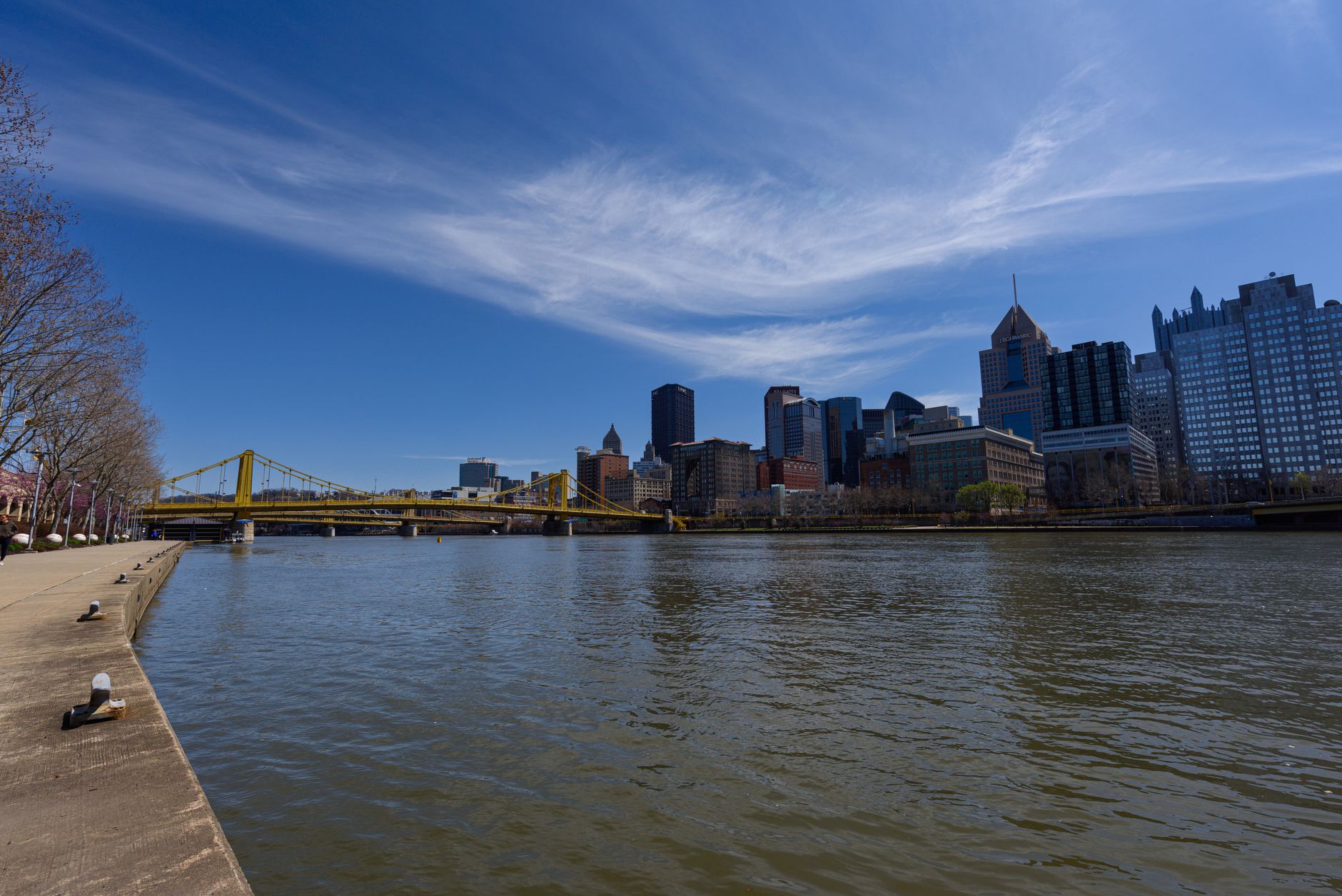
The Baltimore and Ohio Rail Bridge Reflected in the Monongahela River.  Photograph Brian Cohen
The Baltimore and Ohio Rail Bridge Reflected in the Monongahela River. Photograph Brian Cohen

Features

The Pittsburgh Vintage Grand Prix: The Biggest, the Baddest, and the Most Urban

Related Images

Related Tags

The Pittsburgh Vintage Grand Prix is like nothing else -- anywhere. The reason: the cars zooming around Schenley Park and city streets July 19 and 20 will be older than most of the people watching them. Most were built before 1960. While it’s the largest vintage sports car race in the country, it’s the only one run on city streets.

Many tens of thousands of people will turn out and they’ll all find something to enjoy. Those in the second half of life can bask in nostalgia for the tight little MG and Triumph roadsters they rode around in (or more realistically, lusted after) when they were young adults. The younger set will get a charge out of funny green and yellow cars on skinny tires sliding, belching flame from tailpipes and making noises they’ve never heard before.

And such a deal -- admission is free. Your biggest investment will be the effort spent walking from the periphery, past exhibits, concessions and attractions to find race vantage points along the 2.33-mile course with 22 turns that sweeps past Phipps Conservatory and Botanical Gardens and climbs through the Bob O’Connor Golf Course.

Now in its 26th consecutive year, the Pittsburgh Vintage Grand Prix started as a one-day race in 1983 and has blossomed into a 10-day festival of car shows, events and races.

Nearly 200 vintage cars race at Schenley Park each year. With an average value of $50,000, that’s about $10 million on the track. Many are unusual and rare, like a $2-million-dollar 1953 C-Type Jaguar with European racing provenance, and several 1930s Alfa Romeo 6C racers, a 1929 Ardent Alligator and several Bugattis from the 1920s. Many are more familiar original Minis, Alfa Romeos and Porsches.

Make no mistake, this is racing as the cars thunder, snarl and buzz around the course. Drivers run as hard as they can against the course -- but not against one another. There’s no tomfoolery like the bumping or blocking you might see in NASCAR or Indianapolis racing. Nobody has an interest in getting hurt or bending the machinery.

There are no cash prizes. Winners are awarded a trophy and a jug of Crown Royal, but their costs include a $350 entry fee and racing fuel for which they pay--gulp-- $12 per gallon.

Each race features about 30 cars running in group divisions, based primarily on age, body type and engine size. Most of the cars are not fast in absolute terms -- you could do pretty well against the field in your niece’s Mustang GT. It’s not about speed but quickness. The course record, set last year by a tiny open-wheeled racing car, is just over two minutes, roughly 60 m.p.h.

Drivers need to brake and downshift for turns like the extreme downhill hairpin on Serpentine drive, choosing speeds as low as 10 m.p.h. The only straightaway along Schenley Drive (Boulevard of the Allies) isn’t really straight and it’s uphill. The charm of the Schenley Park circuit is that spectators see cars for only a few seconds. They seem to explode out of corners and accelerate away.

Though the Schenley Park activities comprise the main event, the Vintage Grand Prix begins Sunday, July 6, with a “Kick-Off Rallye” that lets drivers test their driving and navigational skills against a mystery course starting on South Craig Street in Oakland.

July 12 and 13 boast “Historic Races” at BeaveRun MotorSports Complex in Beaver Falls, featuring seven vintage races including legendary American muscle cars of the 1960s and 1970s. Those races, from 9 a.m. to 4 p.m., require $12 admission, $20 for both days.

July 14 presents an “Invitational Car Show” on Walnut Street, Shadyside, where car lovers can examine -- but not touch -- rare and classic automobiles from around the world as well and across the years. July 15 is a cruise that includes vintage and non-vintage cars at the Waterfront in Homestead from 5 to 9 p.m.

July 16 the “Downtown Parade Lap & Car Display” will showcase 50 race and show cars rumbling through downtown Pittsburgh on their way to car shows at USX Plaza, PPG Place and Market Square. Later, there is a “Grand Prix Tune-Up” event at Bossa Nova.

July 19 is the Vintage Qualifying Races and Combined Car Show at Schenley Park from 10 a.m. to 4 p.m. Attractions include 2,000 show cars, British Car Day, Italian Marque of the Year, Shop’n Save Hospitality Tent, Vendors’ Village and Sunoco Vintage Rides.

On July 20 race day opening ceremonies take place from 11 a.m. until noon, including a Patron Parade and Thunder Run motorcycle event. Races begin at noon, and combined car show and sponsor events are open all day.

Details of all events as well as a wealth of graphic and historic material about vintage racing, Pittsburgh’s event, and the cars and drivers is available at the vintage grand prix’s web site: www.pvgp.org.

Proceeds from the Pittsburgh Vintage Grand Prix help provide residential care, treatment and support for developmentally disabled individuals at the Autism Society of Pittsburgh and Allegheny Valley School. This year’s event will feature a tribute to the late Myron Cope, a champion of autism care, and a founder of the Pittsburgh Vintage Grand Prix. Cope died February 27. Last year the event donated more than $170,000 to its charitable beneficiaries.

For 2008, Italian cars are being honored. Each year the vintage grand prix highlights a marque, or car manufacturer. This year all Italian cars will be recognized as the marque. Great racing names like Ferrari, Alfa Romeo, Maserati, Fiat and Abarth will be displayed.

More than 1,200 individuals volunteer each year to stage the Grand Prix. Race jobs include corner workers, tow truck operators, timing and scoring officials, pit and paddock directors and food preparation. On the show side, volunteers direct traffic, empty trash, manage car shows, sell merchandise, take donations and direct the parade.

Each race weekend is sanctioned by a racing organization that is responsible for promoting and coordinating the race cars and arranging the race groups. The Vintage Sports Car Club of America has been the sanctioning body at Schenley Park since 1983 and celebrates its fiftieth anniversary in 2008. The Vintage Racer Group sanctions and organizes the Historic Races at BeaveRun.

The BeaveRun event, now in its fifth year, began when the vintage grand prix introduced an additional weekend of racing to precede the Schenley Park events. The 1.5-mile track allows fans to see newer cars, including American muscle cars and big-bore racers, that are too big and fast for Schenley Park’s circuit.
With thanks to the Pittsburgh Vintage Grand Prix for the images.