Saturday 22 November 2008
Pitt Girl Was Here, at Pamelas, Squirrel Hill. Photograph by Tal Cohen |

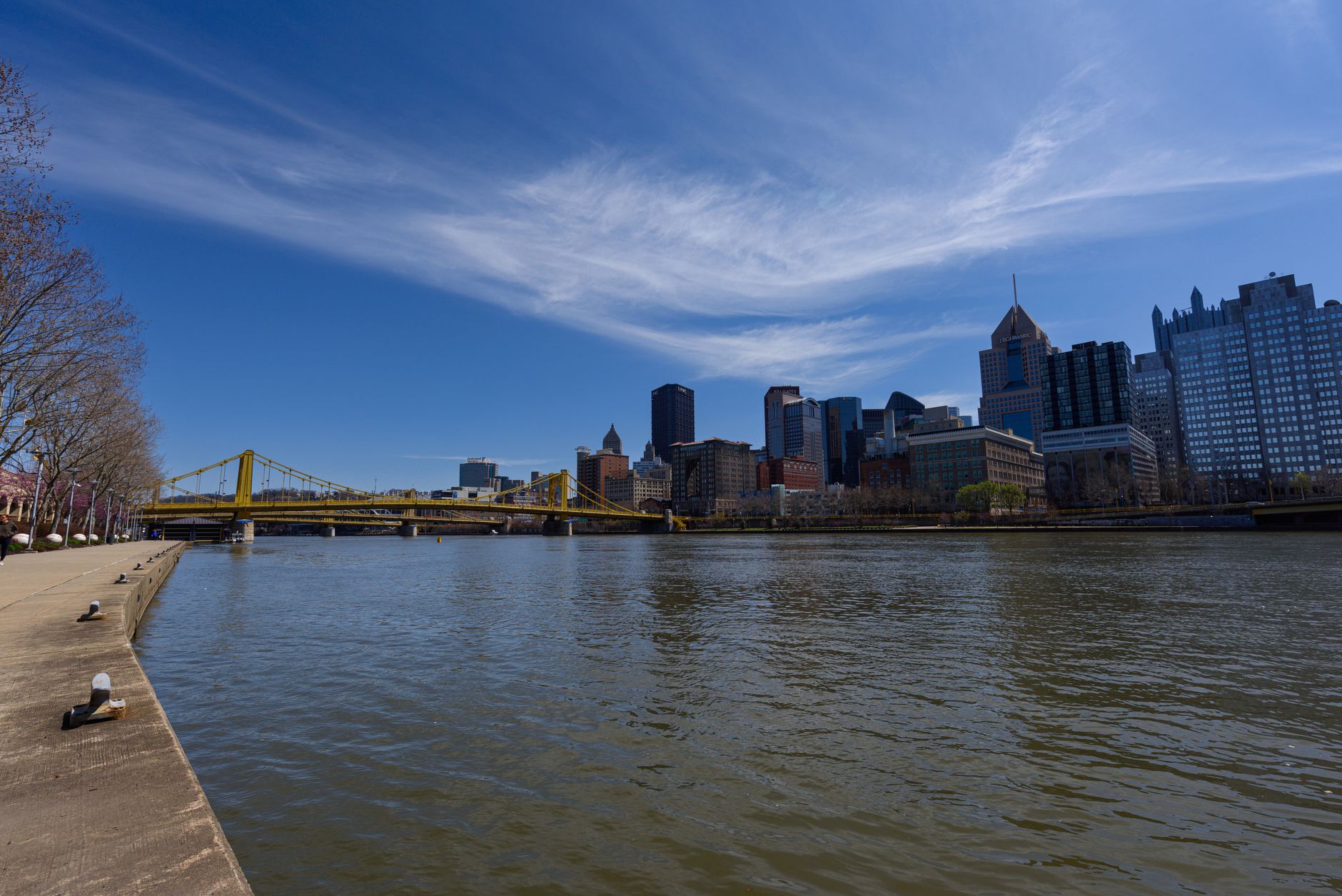
Downtown Living - More Affordable Than You Think

By: Harold Miller
April 19, 2006

 You’re reading more and more news stories about the trend of people living Downtown, both locally and nationally. You’re hearing about cool new places to live in Downtown Pittsburgh, like the Granite Building, 151 First Side, 930 Penn Avenue, the Carlyle and Piatt Place. And maybe you’re saying to yourself, “I wish I could live Downtown, but I can’t afford to live in the City.”

Think again. Living in Downtown Pittsburgh is not only less expensive than you might think, but you might actually save money (not to mention time) by making the move.

Don’t believe it? Let’s look at the reasons why people think Downtown is expensive, and compare them to some of the costs of suburban living that people tend to forget.

That Darned City Income Tax

One of the biggest fears people have about living Downtown, or anywhere in the City of Pittsburgh, is paying the City’s high Earned Income Tax.

But there’s an equally but hidden high tax to living in the suburbs--the cost of commuting. What do you mean, hidden? you ask. You know what you shell out at the gas pump every week. But it’s not just the gas pump cost but the total cost of wear-and-tear on your car: New tires, oil changes, repairs, and ultimately, a new car. The easiest way to add it all up is to let the IRS do it for you, through their official mileage rate which is a a whopping 44.5 cents per mile for 2006.

So let’s say you live in Wexford and you drive Downtown every day, a 36-mile round trip. At 44.5 cents per mile, it costs you $16 per day to drive; before you even get to a parking lot or garage you’re spending more than $4,000 every year to commute.

If you moved Downtown and walked to work, you’d save that $4,000. But you’d have to pay the higher earned income tax rate. So if your Downtown job pays you $50,000 per year, you’ll shell out $1000 more in earned income tax. But you can deduct that from your federal taxes, so it only costs you $850 more (at the 15% marginal tax rate). On balance, you’d save $3,150 every year, not to mention the time and aggravation of that daily commute. Even if you earn $150,000, you’re still saving more than $2100 per year.


I Moved to the Suburbs to Save on Property Taxes

OK, you have to factor in property taxes, too. Believe it or not, property taxes in the City of Pittsburgh are about average among municipalities in Allegheny County. But even if your suburban property tax rate is lower, you still might save money overall if you move Downtown and stop commuting. Let’s take a Monroeville resident who works Downtown in a $60,000 per year job and lives in a $175,000 house. They pay $4,300 in property taxes and $900 in earned income tax to Monroeville, for a total of $5,200 per year. If they buy an equivalently-priced condominium Downtown, they’ll pay $4,800 in property taxes and $1,800 in earned income taxes to the City of Pittsburgh. After adjusting for federal income tax deductions, they’ll pay $1,000 more in taxes to live in the City. But they’ll save $3,200 in commuting costs, for a net gain of over $2,000 per year. If they make $100,000 in salary and live in a $300,000 home, they will still save over $1,300 per year.

What about people who moved further out to enjoy even lower property taxes? They may have lowered their property taxes, but they increased their commuting costs. The fact is, the farther away you live, the more you save by moving Downtown – potentially many thousands of dollars.

I Don’t Pay Condo Fees On My House

But wait, what about the condo fees? Not only do downtown residents have to pay the mortgage and taxes, but if they buy a condo, they have to pay condo fees that they don’t pay on their suburban house.

Stop and think a minute about that suburban house. When was the last time you had the roof replaced? The driveway repaired? The furnace replaced? The lawn reseeded? When was the last time you bought a new lawn mower? Take each of those capital costs, divide it by the frequency with which it occurs (in other words, if you spend $3,000 every 10 years on something, then it costs you about $300 per year), and add them all up. Add in the money you spend every month on garbage fees, water and sewer fees, yard maintenance, etc. And if the condo fee includes some utilities, add those in for your suburban house, too. Compare the total to the condo fee, and you might be surprised how close they are. The condo fee is the actual cost of maintenance and utilities on your building, spread out on a monthly basis—and minus the worry. And don’t forget the time saved not shoveling snow or mowing grass or sitting around waiting for repair crews.

The Bottom Line Will Vary Depending on You

Now that you understand you’re comparing apples and oranges, you can do a detailed comparison for your own circumstances. Gather up all of your monthly bills, and also dig out the past ten years of expenses. Figure out how much your commute costs you, including the cost of parking. Calculate the true cost of living in the suburbs before comparing it to the cost of living Downtown.

Time is on your side. Yes it is.

That’s what you actually pay. Even if you end up spending a little more money to live Downtown, there’s the consideration of time saving. For the Monroeville commuter who spends 400 hours or more every year commuting, a move downtown saves the equivalent of 10 work weeks every year. Instead of listening to Books on Tape in your car you can walk home and read the books in the time you’ve gained.

In the end, it’s just money. Ask any downtown resident about their lifestyle and one thing is usually mentioned: life is easier and for some people, that’s priceless.

“With our move downtown, everything got a lot simpler,” says Liberty Avenue resident John Norton, a professor at the University of Pittsburgh. “Fall and winter came and went and I didn't have to touch a rake or shovel a sidewalk. We went from having two cars to one."

Some things, like a more streamlined lifestyle, are priceless.


Harold Miller is President of Future Strategies, LLC, a Pittsburgh-based consulting firm. He moved Downtown from Murrysville eight years ago and has lived there happily ever since.


First photo: "Living at 947 Liberty Avenue"

Second photo: "The newly completed Encore on 7th and Fort Duquesne Boulevard"

All Photographs Copyright Tom Altany