It all began a few years back, when writer Bob Regan and photographer Tim Fabian brought The Local History Company’s Cheryl Towers their idea for what became The Steps of Pittsburgh, an exhaustive – and exhausting – accounting of every set of city steps. Her initial reaction: “Cool! We like things that make a place quirky. While everybody talks about Pittsburgh’s steps, no one’s ever written them up as a book.”
Much, much sweat equity later, The Steps of Pittsburgh became independent Pittsburgh-based book publisher The Local History Company’s all-time best seller. Then, having caught their collective breath, co-owner Harold Maguire asked, why not do the city’s bridges?
“We have things here that are so wonderful,” Towers says, “that need to be recognized and preserved and celebrated. Bridges give Pittsburgh a sense of place -- and authenticity. They make the city wonderful.”
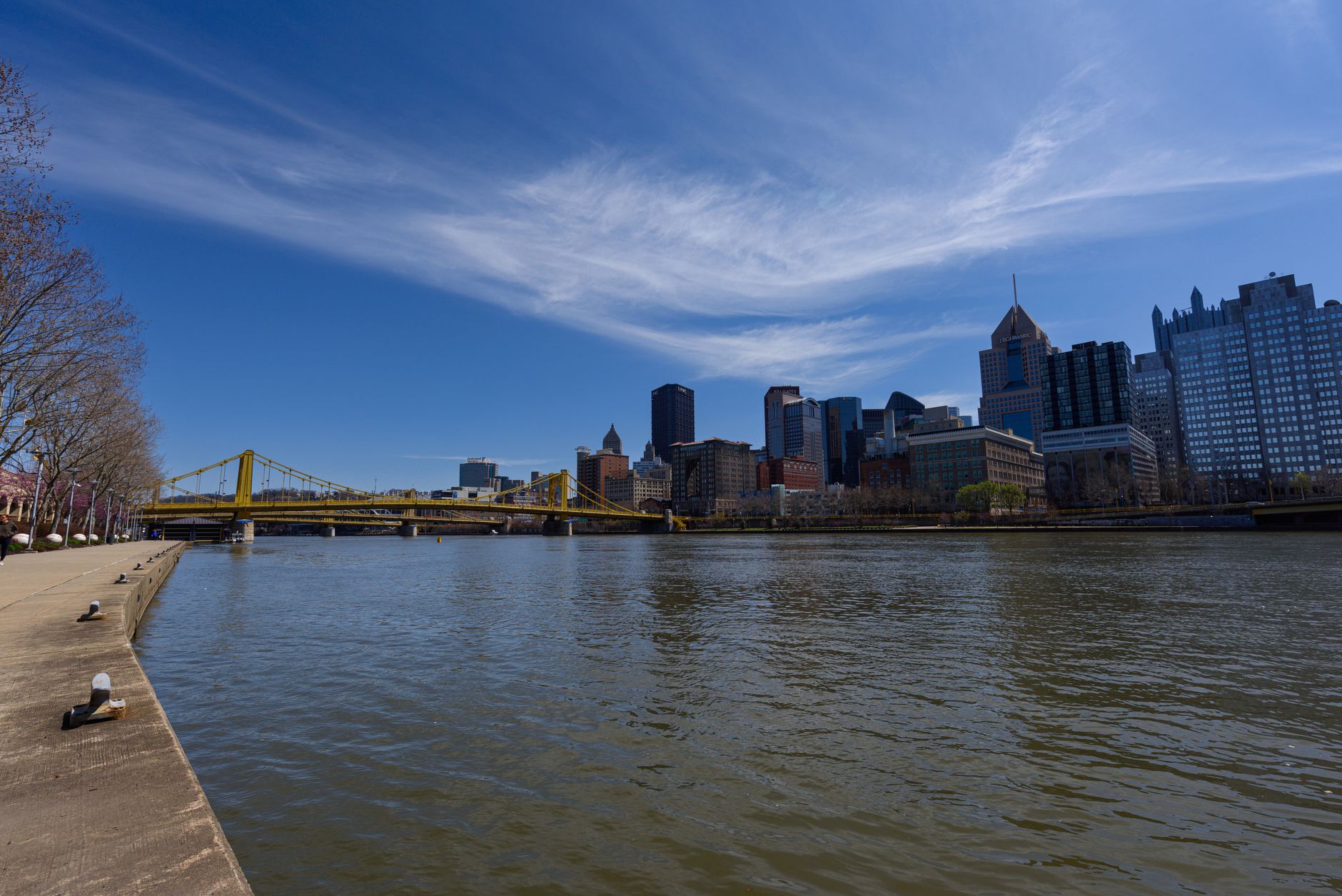
Ready for another challenge, Bob ‘n’ Tim started nosing around. What hooked them wasn’t merely the glory stuff – although there’s plenty of that – like the Three Sisters, say, the Clemente and Warhol and Carson bridges gleaming Aztec gold in the afternoon sun. Instead, it was the little things, some sculpture here, a footbridge there, hidden, forgotten stuff that can’t be found anywhere else. “The project,” co-creator Tim Fabian says, “became a four-way conversation.”
It's a book. And a conference.
Now, their Bridges of Pittsburgh, a definitive catalogue of all 446 bridges in the City of Pittsburgh, with 150 current and historical photos, and 10 user-friendly tours, is set for official publication June 12, coinciding with the Engineering Society of Western Pennsylvania’s 23rd Annual International Bridge Conference. As the world’s pre-eminent bridge industry conference, IBC regularly draws more than 1,200 bridge engineers, designers, builders, and suppliers. Last year, for example, attendees came from 47 states and 15 countries to Pittsburgh, the city now proven to have the world’s greatest number – and the greatest diversity – of bridges.
As Bob Regan demonstrates, more bridges than Venice or St. Petersburg. “Numbers alone don’t account for the title of City of Bridges,” he writes. “Equally important is the variety. Pittsburgh has or has had pedestrian, automobile, railroad, bus, light rail, water, hot metal, and incline-carrying bridges. It also has or has had covered bridges, wooden bridges, all-steel bridges, toll bridges, bridges of every style, shape, and form, except for a drawbridge.”
In cataloguing and photographing this extraordinary collection, Regan and Fabian join a select group of authors, including the late Walter Kidney (Pittsburgh Bridges: Architecture and Engineering) and Robert Gangewere (The Bridges of Pittsburgh and Allegheny County), among others. But where those efforts have focused more on architecture and engineering, respectively, and are large-format and monograph, the Regan/Fabian version is more a user’s guide, literally designed to be tossed in a backpack and hauled hither and yon. “We wanted a book that wouldn’t just sit on the coffee table,” Towers says, “but one that was in people’s hands. We want people to get out and use it!”
Cross that bridge when you come to it
Users will find The Bridges of Pittsburgh divided into three parts: Bridge Background, The City of Bridges, and Bridge Tours, followed by two appendices, the second listing each bridge. The book even devotes a chapter to tunnels, what Regan drolly terms “negative bridges.”
First, Regan and Fabian get a little history and a few definitions out of the way – arch, suspension, cantilever, and so on, all written in easy-to-understand language. There’s a trio of engineers -- John Roebling, Gustav Lindenthal, George Ferris – and a treasure trove of historical nuggets. The city’s first bridge, for example, at Smithfield Street, was wooden; it was also the city’s first bridge to go up in flames, in the Great Fire of 1845. There’s the all-time bad karma bridge: fire took the first Sixteenth Street Bridge (1851), flood the second (1865), another fire the third (1918). And, whew!, the last bridge to collapse was the Mount Washington Roadway Bridge, which tumbled into the rocky hillside during construction, 1927, all hands accounted for.
Still, the best part of The Bridges of Pittsburgh is the 10 mapped tours. The Downtown Walk Through History, for example, covers the Clemente Bridge, Fort Duquesne Bridge (which includes a rare pedestrian walkway on an interstate highway), derelict bridge piers, and so on. The Schenley Park tour features tufa bridges (calcium carbonate cladding on reinforced concrete). The bike Tour du Ponts-Sud presents the Eliza Furnace Trail, the old and new Hot Metal Bridges, and Lindenthal’s historic Smithfield Street Bridge, among others. Its sister ride, the Tour du Ponts-Nord, rolls from Washington’s Landing to the Sixteenth Street Bridge, Three Sisters, and so on. By boat, you get the underbellies of a dozen Big ‘Uns.
As Regan points out, within roughly four miles, from the Brilliant Railroad Bridge over Washington Boulevard, to the Fort Pitt Bridge at the Point, Pittsburgh encompasses the entire history of bridges – Roman aqueduct to the world’s first computer-designed bridge, with many stops in between. “It’s not only amazing,” he says, “but truly magnificent with great aesthetic value.” His favorite: Wilksboro, a Brighton Heights pedestrian span 100 feet above a wooded ravine. “It’s absolutely spectacular,” he says.
For his part, after some 3,000 images recorded, Tim Fabian favors the Sixteenth Street Bridge, with its multiple humps, forest of struts, stone piers, and four metal globes -- a bridge that simply has to be viewed from afar to be appreciated.
A Love of the city
“A bridge doesn’t look like a bridge when you’re on it,” he adds. “So in every case, I had to find the right view. I had to become involved, to explore each bridge visually.” Some shots were carefully staged, Ansel Adams-like, setting up the camera and waiting for the light. Others “were pure Zen,” he says, “spur-of-the-moment intuition.
“In creating these books,” Fabian says, “the value-added for me was the visual excitement of re-discovering this beautiful place. All four of us moved here from the East Coast, so we never take Pittsburgh and its real beauty for granted. Outsiders tend to maintain that level of excitement. It’s a fascinating place to live.”
Award-winning writer Abby Mendelson is the author of numerous books, including The Pittsburgh Steelers Official History and Pittsburgh: A Place in Time, a collection of neighborhood profiles. His last Pop City piece was on WYEP’s new South Side Community Broadcast Center.
Photos:Sixth Street Bridge (Roberto Clemente Bridge)
16th Street Bridge
28th Street Bridge (connecting Strip District to Polish Hill)
Pedestrian Bridge to Washington's Landing
Bloomfield Bridge
West End Bridge
all photos copyright © Jonathan Greene