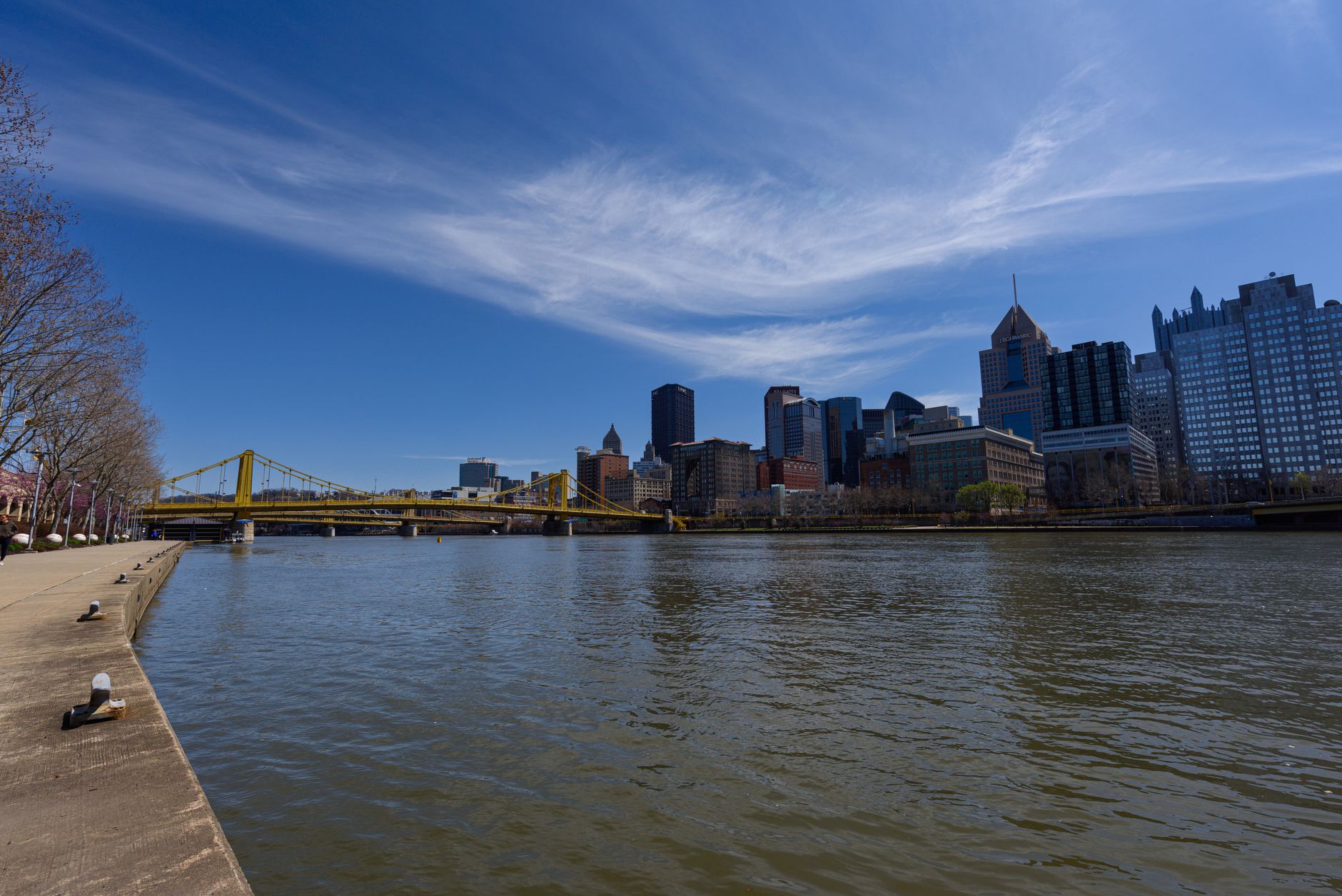
Tucked away on a quiet, residential street in Pittsburgh's Northside is
Beleza Community Coffeehouse where inviting café tables and chairs perch on the sidewalk of the Mexican War street. Here the coffee is organic and Fair Trade and, judging by the mug of Ethiopian brew sampled this day, delicious.
But there's more than meets the eye at this sweet spot. This is the story of how a single coffee shop came to be and the difference it is making in the neighborhood. It’s a story of hope and commitment and the kind of friendship that lasts a lifetime.
Seven Friends from HopeWhen seven friends from
Hope College in

Michigan considered their post-graduation prospects, they were clear on one thing: They wanted to stay together. "None of us were necessarily career-minded in college. So we weren't like, 'Let's go to a city to follow a job,'" explains Philip Johnson. "We just wanted to be with these people. So we decided to pick a city and move to it."
The group considered several cities in the Midwest, including Detroit, and visited Pittsburgh and Philadelphia. Pittsburgh piqued their interest because several of them had spent some time at The Pittsburgh Project, a nonprofit community development organization. In the end, they chose Pittsburgh because they were drawn to the city's manageable size, considerable cultural amenities, and its down to earth people. Johnson, who hails from the flat landscape of Minneapolis, was taken by Pittsburgh's "intense geography.”
Kimberly Walkenhorst couldn’t wait for graduation: she transferred from Hope to finish her last two years of college at the University of Pittsburgh. She says that she likes Pittsburgh because you can go out and see people you know all around the city. "You immediately start feeling this 'homeness' to it because you're recognized. You go to Chicago; you go to New York; you go to Portland: You're not needed there. There are tons of people there. It doesn't matter if you live there or not. But Pittsburgh, if you live here, you add to the population in a significant way."
And Social Justice for All Walkenhorst and the other six made a significant impact to the city when

they opened Beleza Community Coffeehouse on Buena Vista Street in February 2006. But the friends didn't know they would start a coffee shop when they first arrived here. Beyond sticking together, their only clear mission was a commitment to social justice.
"I think we had this connection with each other because everyone was interested in social justice and how that should play out in everyday life,” says Walkenhorst. “It's kind of rare to have this many people who aren't committed to any place, but were committed to each other and to living this out. And so we said, if we just disperse, we're probably never going to find this again. So let's try to keep it together.”
They chose the Northside for its strong community and their belief that they could contribute to what was already happening there. The group was very conscious of not barging into a neighborhood and telling people what they needed. Instead, they asked residents what they wanted. A lot of people lamented the lack of a place to meet and hang out. Since several in the group had worked in coffee before, they decided a coffee shop was the way to go. The goal? To create a "third place" apart from work and home: a place for neighbors to socialize and share with one another.
A sign from the
Northside Community Development Fund at the space they liked noted that it was available for commercial use and instructed interested parties to contact the organization. When the group of Pittsburgh transplants did just that, they were initially turned away because they didn't have a business plan. But one sound business plan later, the Northside Fund matched the group's capital with a $15,000 community development loan.

Their business philosophy is rooted in principles of social justice, environmental responsibility, and support for the local economy. This means that Beleza offers all organic and Fair Trade coffee and tea from
Peace Coffee and
Rishi Tea. Joe Freyvogel delivers baked goods twice a day – fresh from his garage-turned-commercial kitchen (called Baked for You) just a few miles away. Beleza purchases its dairy products, soy, and juice from
Turner Dairy Farms in Penn Hills and sells organic salads and wraps from Mung Dynasty on the Southside.
Rooted in the Community And talk about local. All seven Beleza owners live within five blocks of the coffee shop, with Walkenhorst living just upstairs. "Here, we're living in the neighborhood," Johnson says. "We contribute to the neighborhood. It's our neighborhood, too." He points out that the community was diverse when they moved there, except in terms of the thing people usually "have too much of: 20-somethings who listen to indie music and drink coffee," he says with a grin.
But that's changing. Beleza customer Jeff King, who stops in daily, notes that the coffee shop and its culture have brought an influx of energetic young people to the area. A senior associate at
EDGE Studio and an adjunct assistant professor at Carnegie Mellon's School of Architecture, King moved to the Mexican War Streets about six years ago.
When Beleza came along, "it provided a critical missing piece of the neighborhood,” says King. “We all live there because it's dense, walkable, and community-oriented. But a daytime meeting place was missing. Beleza is open generous hours and has made the walkable

community aspect of the neighborhood complete. It's also acted as a catalyst to get other people interested in the Mexican War Streets."
Not only has it helped the neighborhood to become more family oriented, says King, but he jokes that his three-year-old daughter Frances considers the coffee shop her living room.
It’s that and more. Beleza is also an art gallery featuring the works of local artists. Walkenhorst is devoted to finding interesting and sometimes underrepresented artistic voices to showcase every four to five weeks at Beleza. That's the beauty of this coffee shop: It's so many things in such a small space.
Running a Business by ConsensusWhile each of the seven has a defined role within the business, from working in the store to handling the finances, marketing, or inventory, everyone is considered equal. "We've made a decision in this business that none of us has the final say. We chose that together," says Walkenhorst, adding that consensus-decision making with seven people is something they've learned to do better over time.
"In some ways it's challenging, but we obviously trust each other," Walkenhorst says. She points out that a lot of people warned them not to go into business together, saying they would end up hating each other.
But that hasn't happened, and Walkenhorst thinks she knows why: "None of us started this to make money." She explains that their goal is to make enough to be sustainable and use any extra to do positive things. "This is our dream," she says. "And it's happening."
Jennifer McGuiggan, a freelance writer and editor, is owner of
The Word Cellar . Got feedback on this article? Click
here to comment.
Main picture, l to r:
Gavin Deming, Phil Johnson, Kimberly Walkenhorst, Ashley North, Stephen Frey-Wagg, Emily Frey-Wagg, Joanna Deming
Photographs copyright Brian Cohen