The Business Case for the Arts
Pittsburgh Arts groups |
Wednesday, September 16, 2009
The Business Case for Arts: an Editorial
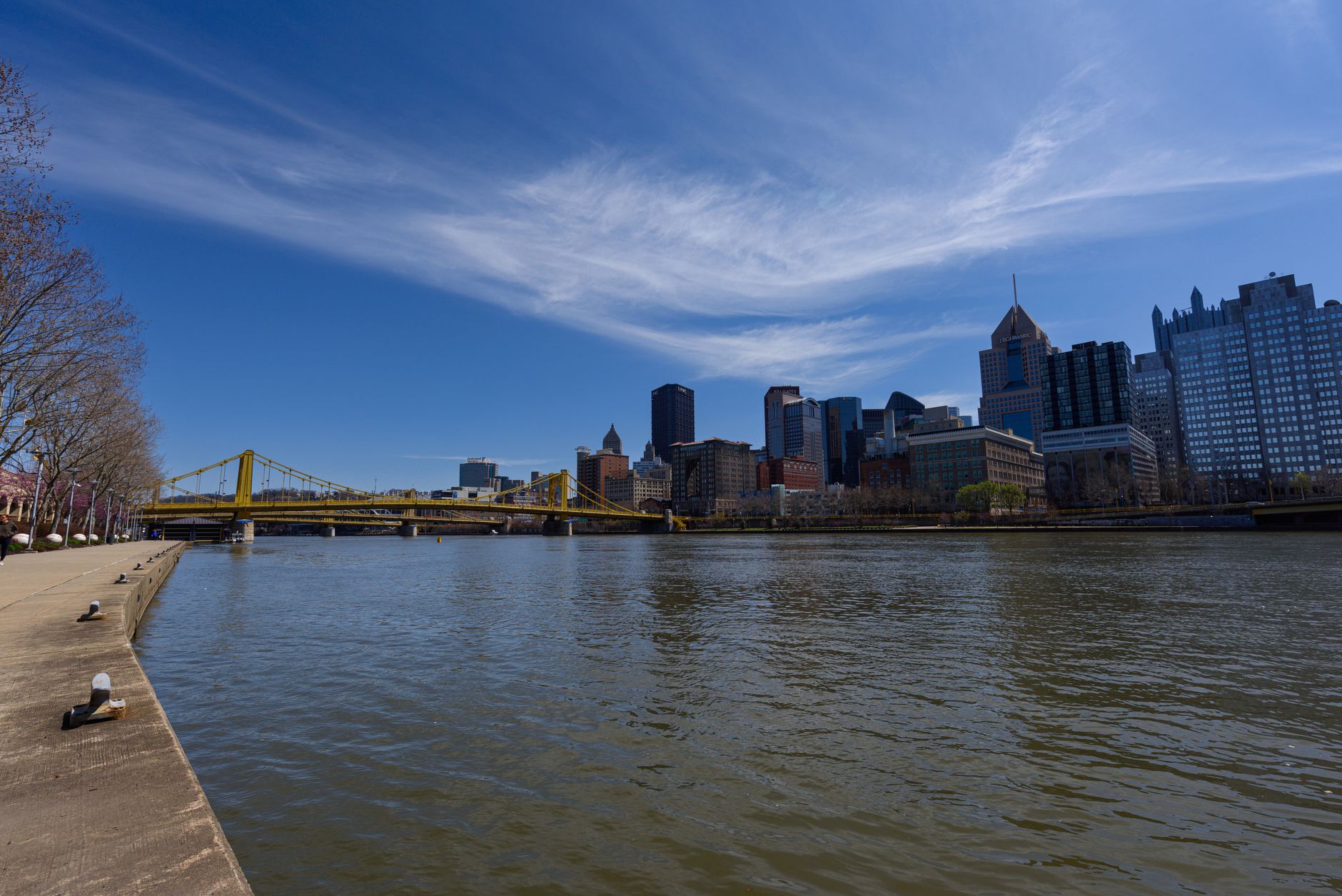
The arts allow us to imagine a new way to live and envision the world. Artists and cultural organizations create a world in which art and business collaborate to spur development and revitalization in Pittsburgh, serving as a model for cities around the globe.
It is no surprise that Phipps Conservatory and Botanical Gardens, the Andy Warhol Museum and Pittsburgh's Creative and Performing Arts high school were selected to host the main White House events during the Pittsburgh Summit. Pittsburgh's rich cultural legacy holds significant international value.
The Warhol features extensive permanent collections of art and archives on one of the most influential American artists of the 20th century – a Pittsburgh native and a student at Carnegie Tech (now Carnegie Mellon University). Over the eight years, exhibitions organized by the Andy Warhol Museum have traveled to 49 cities worldwide and have garnered attendance upwards of 7 million people.
Housing the colorful exhibitions of plants and flowers, Phipps Conservatory's green buildings are a model of forward-thinking environmental initiatives. Phipps has the first LEED®-certified visitor's center in a public garden, as well as the world's first fuel cell in a conservatory— highlighting an important piece of Pittsburgh's new green economy.
And at Pittsburgh's nationally recognized Creative and Performing Arts (CAPA) High School a challenging and integrated curriculum is offered that equally provides world-class preparation for university study, and conservatory level preparation for artistic careers. CAPA is in the city's Cultural District, an international paradigm of economic revitalization through the arts. For 25 years, The Pittsburgh Cultural Trust has steadily transformed this 14-block area, once a blighted red-light district, into what stands today as the home for thousands of regional, national and international artists, as well as a hub for commercial and residential activity.
The arts also contribute to the economic fabric of the region. The non-profit arts and culture industry in Allegheny County generates $341 million in economic activity —$230.7 million by the organizations themselves and an additional $110.7 million in event related spending by audiences. In addition, the industry supports over 10,192 full-time equivalent jobs and $33.7 million in local and state government tax revenues.*
Artists, around the world recognize Pittsburgh as an ideal location to work, live, study, and create. The affordable cost of living and high quality of life allow artists to experiment, and transform spaces. Lawrenceville and Southside neighborhoods now thrive with artist studios, design firms, and independent stores. Homestead and Braddock—once solid steel towns— now employ the arts as a catalyst for economic development and garner widespread international attention. On Pittsburgh's Northside, inventive partnerships among cultural organizations are having an impact on non-profit institutional advancement, neighborhood revitalization, public and private ventures, artistic and design excellence and community development.
The higher education community is thriving with budding professional architects, actors, lighting designers, musicians, animators, photographers, game developers and graphic designers ready to call Pittsburgh home. A number of international artists travel in-and-out of Pittsburgh, displaying, lecturing, creating, or learning art.
The Carnegie International, a pre-eminent international survey of contemporary art in North America organized by Carnegie Museum of Art, brought 40 emerging and established artists from 17 different countries last year. The Mattress Factory, a globally unique museum with international impact, has brought artists from India, China and elsewhere. Pittsburgh Filmmakers and the Pittsburgh Glass Center have few rivals anywhere in the United States.
The region is also peppered with hundreds of small to mid-size arts organizations. Many organizations like Attack Theatre, a contemporary dance ensemble, Quantum Theatre, a multi-dimensional theater company, and Squonk Opera, a theatrical music group, started in Pittsburgh yet present internationally, carrying the Pittsburgh message with them around the world.
The August Wilson Center, named for Pulitzer Prize-winning playwright and Pittsburgh native August Wilson, joins numerous arts organizations, such as Kuntu Repertory Theatre, the Afro-American Music Institute, the Kelly-Strayhorn Theater, Afrika Yetu, Manchester Craftsmen's Guild, the Pittsburgh Jazz Orchestra, Multicultural Arts Initiative and the Silk Screen Film Festival along with many nationally known artists and performers from this region, which together create a rich fabric of cultural influencers and economic drivers that contribute to a diverse quality of life in our city and beyond.
Locally, there is a history of successful business-arts partnerships. The world renowned Pittsburgh Symphony Orchestra acts as ambassador for our city through its international tours and performances. The Orchestra has partnered with the Allegheny Conference on Community Development and its affiliate the Pittsburgh Regional Alliance on tours to Europe and Asia, bringing business opportunities to Western Pennsylvania.
deeplocal, a Pittsburgh based multi-media company, has created "in-residence" fellowships for businesses and artists. For the artists, the term "in-residence" means the artists are in a location, free to create and design new artwork or compose new music. For businesses, this translates to innovative problem solving, creating efficient business models or finding methods to increase productivity.
Nationally there is a trend to connect art and business sectors in order to generate new ideas, ingenuity and efficiency. In February 2004, Harvard Business Review exclaimed, the "MFA is the new MBA," giving master of fine arts degrees the same relevance as a master of business degree in the business sector.
Pittsburgh's founders, early business leaders like Andrew Carnegie and Henry Clay Frick, and local residents understood that artists help shape the world we live in. The city's rich cultural heritage provides a solid foundation for the arts' contribution to Pittsburgh's transformation.
And now, through the vision of its current leaders, the city is a cultural hotbed of activity, innovation and artistic thinking. In order to continue this trend, the two sectors must remain proactive in building their relationship. The arts cannot survive without a thriving business sector, and business needs the arts to improve quality of life and attract new companies.
The Arts and Economic Prosperity III study was Conducted by Americans for the Arts and the Greater Pittsburgh Arts Council
This editorial was written and endorsed by the following organizations as part of the Pittsburgh is Art campaign. Pittsburgh is Art is a collaboration of local arts organizations that have gathered to develop a collective voice to share with visitors of the Pittsburgh Summit and beyond, about the arts impact on the transformation of Pittsburgh, the role the cultural community plays in the economic vitality of the region and by showcasing the superior cultural activity in Western Pennsylvania.
Larry Tamburri, President, Pittsburgh Symphony Orchestra, Barbara Luderowski, Founding Director, Mattress Factory, Michael Olijnyk, Curator of Exhibitions Mattress Factory David Hilenbrand, President, Carnegie Museums of Pittsburgh, Lynn Zelevansky Henry J. Heinz II Director, Carnegie Museum of Art, Hilary Robinson, Stanley and Marcia Gumberg Dean, College of Fine Arts, Carnegie Mellon University, Marisol Wandiga, President, Latin American Cultural Union, Peter Kope, Producing Artistic Director, Attack Theatre, Mitch Swain, Chief Executive Officer, Greater Pittsburgh Arts Council, Van Kaplan, Executive Producer, Pittsburgh CLO, Charlie Humphrey, Executive Director, Pittsburgh Filmmakers, Pittsburgh Center for the Arts, Pittsburgh Glass Center, Alan Irvine, President, StorySwap, Harish Saljah, Executive Director, Silk Screen: Asian Arts Organization, Roslyn Stulga, President, Steel Valley Arts Council, Richard V. Piacentini, Executive Director, Phipps Conservatory and Botanical Gardens, Karla Boos, Creative Director, Quantum Theater, Jane Werner, Executive Director, Children's Museum, Lee Ferraro, General Manager, WYEP 91.3FM, Tom Sokolowski, Director of the Andy Warhol Museum, Bill Bodine, Director, Frick Art and Historical Center, , Jill Larson, Founder and Artistic Director, Fe Gallery George L. Pry, President, The Art Institute of Pittsburgh Melissa Hiller, Director, American Jewish Museum Christopher Hahn, General Director, Pittsburgh Opera, Nicole Capozzi, Director, Boxheart Gallery, Joshua Hogan, Art Consultant, Boxheart Gallery, Joshua P. Foster, Executive Director, Chatham Baroque, Inc. Janet L. McCall, Interim Executive Director, Society for Contemporary Craft, Susan Johnson, executive director, Classical WQED-fm 89.3 and Kevin McMahon, Chief Executive Officer, Pittsburgh Cultural Trust.
Captions:Pittsburgh is Art Collaborative; Phipps Conservatory and Botanical Gardens; CAPA; Warhol Museum; Pittsburgh Symphony Orchestra in rehearsal.
Group photo courtesy Pittsburgh is Art Collaborative.
All other photographs copyright Brian Cohen