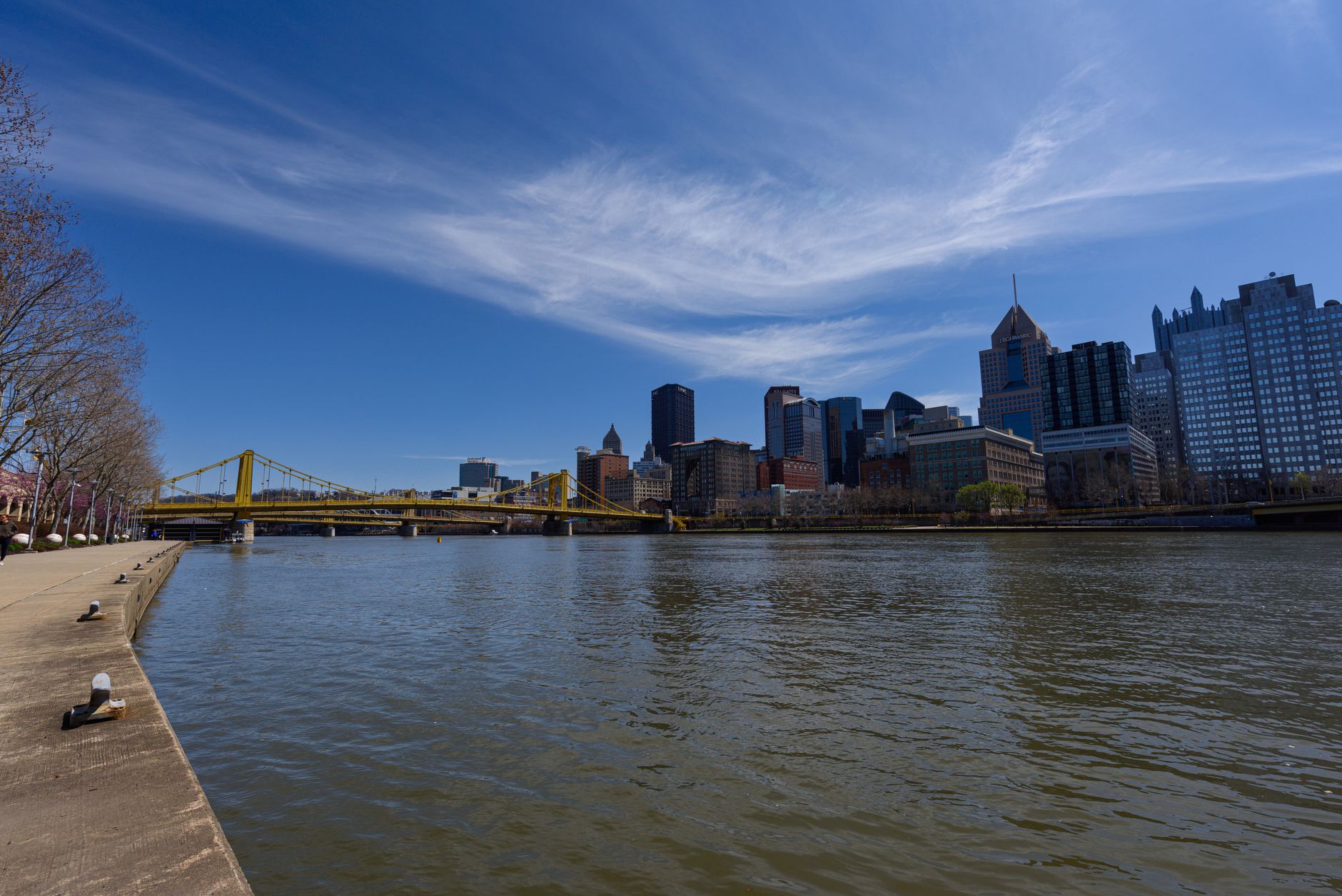
Pittsburgh’s environmental renaissance has been well documented, from the transformation of local rivers, improved air quality, and reclaimed brownfields. What many don’t realize is that another green revolution is quietly taking place-- in Pittsburgh science labs-- and it is impacting the world around us in the most elemental and profound way. Green chemistry – the design of chemicals and chemical processes that prevent or clean up pollution – could become the bridge between the sustainability movement and economic development. And Pittsburgh is poised to lead the way in this molecular revolution.
Chemicals are in “everything that we see, touch, and feel,” says Paul Anastas, founder of green chemistry, director of the Green Chemisty Institute and 2006 winner of the
prestigious Heinz Award in Environment. The award was established in 1993 by Teresa Heinz to honor her late husband, Senator John Heinz, in areas of importance to him.
While in town to accept the Heinz Award, Anastas paid homage to Eric Beckman, co-director of the Mascaro Sustainability Institute at Pitt’s School of Engineering, and Terry Collins, director of the Institute for Green Oxidation Chemistry at CMU, for their groundbreaking work in the new and rapidly growing field of green chemistry.
Here. There. Everywhere.
From beauty products to computer monitors to plastic beverage bottles, chemicals are everywhere. And according to green chemists, very few of the approximately 80,000 man-made chemicals are given careful analysis for toxicity. In fact, the scientists interviewed here – all leaders in the field of green chemistry – said that chemistry students are taught very little about toxicity. But research groups at CMU and Pitt are working to make chemicals safer and better.
“Back when I founded green chemistry in 1991, people thought I was crazy,” says Anastas. But he was determined that chemists could “design the chemicals that we see
and touch and feel everyday without causing harm to humans and the environment.” With a background in synthetic organic chemistry and cancer research, Anastas was intimately familiar with the way molecules affect the body. While working in the Office of Pollution Prevention and Toxic Substances at the U.S. Environmental Protection Agency (EPA), Anastas began to search for ways to eliminate potential chemical wastes before they were ever produced. He chose the name “green chemistry,” he says, because “green is the color of nature – and money.”
In 1996 Anastas worked with the Clinton Administration to establish the Presidential Green Chemistry Challenge Award. Pittsburgh was well represented with this distinction: Collins received the award in 1999, and Beckman in 2002. Bayer Corporation received awards in 2000 and 2001, and PPG received an award in 2001.
Living in a Chemical World
The award-winning Anastas is quick to note that people use chemcials despite their toxicity. “People don’t drive SUVs because they get 8 miles per gallon. I don’t eat a chocolate sundae because it makes me fat. You do these things for other reasons,” he
says. The toxicity is an unfortunate side effect of the chemicals that go into things that we use everyday to make our lives easier or better.
He also offers a better way to sell green. “I don’t think people will buy green,” he says. “I think that people will buy better.” As a chemical engineer, Beckman works with researchers and companies to make chemicals and products better for the environment, human health, and the bottom line. “Sustainability is like your grumpy Aunt Martha,” he says. “At the end of the day, it’s a list of all the things you’ve done wrong.” But by putting concepts of sustainability upfront in the design process, Beckman says that things can work better and cost less. Who can argue with that?
For example, by figuring out how to chemically strengthen polypropolene, Beckman’s group of chemical engineers is working on a safer alternative to PVC pipe, which contains chlorine – a troublesome chemical – and can release a toxic chemical called dioxin if burned.
Meanwhile, over at CMU, Collins’ research group has developed a group of designer catalyst molecules that Anastas calls “a major breaktrough” in green chemisty. Called TAML – tetraamido macrocyclic ligand – these activators work with hydrogen peroxide and other oxidants to break down pollutants such as pesticides and dyes. Their potential real-world applications are profound and diverse, from cleaning up toxic byproducts of paper mills to catching any “loose” dye in your washing machine so you can wash lights and darks together. Their ability to purify water could have tremendous benefits for areas of the world without safe water supplies. According to Collins, TAML activators have uses across the whole spectrum of green chemistry.
“We’re not going to be able to run a high-tech civilization without chemistry. And we’re not going to be able to run a sustainable civilization without green chemistry,” says Collins. “Because of science and technology, individually and collectively we’ve gained
an enormous amount of power that we didn’t have 100 years ago. Back then, you could impact the people you met and a few generations if you lived a long time. Now you can talk to almost anyone on the planet (via TV) and turning on a car can affect a 3-year-old in the year 2500.”
While Collins' hope is that "CMU becomes a great sustainability university,” Beckman shares this vision for the whole city. He points out that there is currently no one place in the U.S. that is considered to be the hub for green chemistry. Beckman believes that Pittsburgh could be that city. With funding and additional support, he says, Pittsburgh could build a critical mass in the area of green chemistry and become a hotbed of green chemistry innovation. He dreams of a “Green Chemistry Greenhouse,” similar to the Pittsburgh Life Sciences Greenhouse.
And Beckman encourages people to open their eyes to the ways in which economic development and sustainability go hand-in-hand. He calls it “tree hugging with a profit.” As he says, it's time to act. “We have to take this as seriously as we took biomedical and digital.”
Jennifer McGuiggan is a freelance writer and editor and owner of The Word Cellar. Her last article for Pop City was about young entrepreneurs in Pittsburgh.
Photos:Researcher in Terry Collins' labPaul Anastas at Heinz AwardsCosmetics and plasticsEric BeckmanPaul AnastasAll photographs copyright © Renee Rosensteelexcept Cosmetics © Jonathan Greene
Paul Anastas at Heinz Awards © Rocky Raco
Paul Anastas © Jim Harrison