| Follow Us:
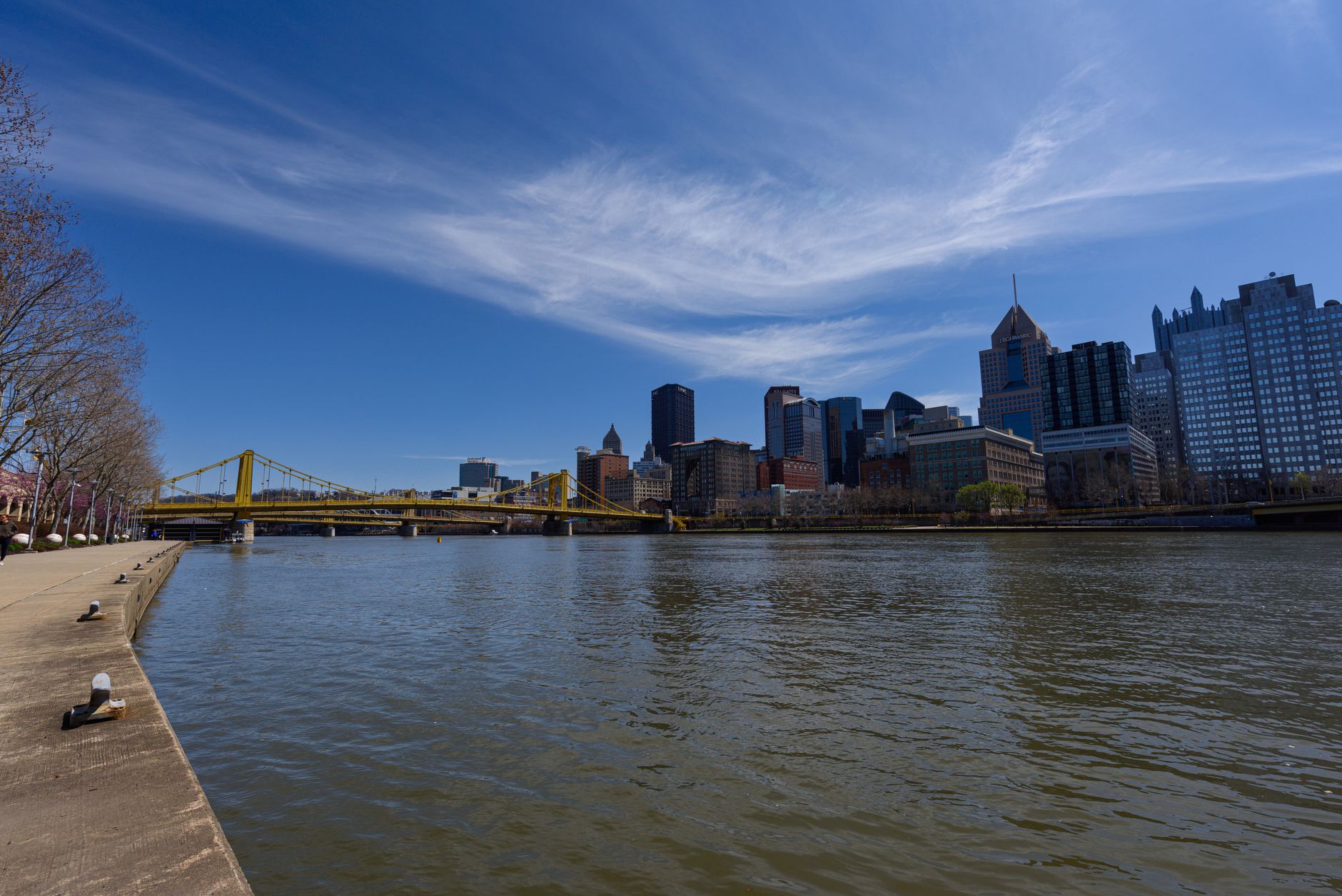
At The David L. Lawrence Convention Center.  Photograph by Brian Cohen
At The David L. Lawrence Convention Center. Photograph by Brian Cohen | Show Photo

Features

Something Old, Something Green

How do you turn a 19th century undertaker's stable into a modern office that's environmentally friendly? You combine the best practices from historic preservation and green building – two areas in which Pittsburgh is a national leader.

Now the home of KSBA Architects in Lawrenceville, the former stable was one of the first and is the smallest LEED (Leadership in Energy and Environmental Design) certified buildings in the country. Developed by the U.S. Green Building Council , the LEED rating system is a national standard for developing high-performance, sustainable buildings.

With a rich architectural history and half a century of environmental strides, Pittsburgh is ideally situated to green historic properties especially with the support provided by the Pittsburgh History & Landmarks Foundation and the Green Building Alliance . And now the two organizations have joined forces to present a National Summit on the Greening of Historic Properties on October 30th at the Senator John Heinz Pittsburgh Regional History Center, an historic property designed by Pittsburgh-based Astorino that features a new LEED-certified addition.

 "Pittsburgh is a national model for a dynamic urban area which has emerged from a former gritty industrial city," says Cathy McCollom, chief program officer with  PHLF. "The current rebirth showcases a wealth of historic neighborhoods with revitalized   commercial buildings and a scenic natural setting. What better place and time to launch the national discussion on the greening of historic properties?" 

Keep the old, with the new

One of the marks of a great city is the artful and scientific integration of the new with the old and in this area, Pittsburgh leads the way. Carl Elefante, principal of QUINN EVANS/ARCHITECTS in Washington, DC, an historic preservation firm that integrates green principles, notes the   abundance of historic buildings Pittsburgh has to work with along with the important leadership already provided in the green world. Pittsburgh, he says, is “a clear leader in the development in a number of different levels of green. In fact, Pennsylvania has one of the best state programs in the country.”

Green building is the third step in the 50-year environmental transformation of our region, says Rebecca Flora, the executive director of the Green Building Alliance, a pioneering non-profit organization that creates market demand for green building through education and project facilitation. Our city has undergone two major Renaissances, resulting in significantly cleaner air and water, the reclamation and redevelopment of brownfields, and neighborhood revitalization.

Now it’s time to look indoors. Flora notes that we spend 80 to 90 percent of our time inside. And while we don’t see the toxins, she says, they’re there. “Humans were not meant to be disconnected from the outdoor environment and daylight,” she says. Green building, commonly known as sustainable development, incorporates environmentally friendly products, systems, and principles--such as daylighting to better connect to the outdoors--into architecture and construction. The result is a healthier environment that pays off in energy conservation and improved performance of both the buildings and those who occupy them. Numerous studies show that students perform better in green schools, patients heal faster in green hospitals, and employees report being more productive and happier in green offices.

From the start, Pittsburgh has been at the forefront of green building, thanks in no small part to Flora and the GBA. In 2004, Pittsburgh led the nation in terms of the number of LEED certified buildings and the amount of green building square footage. Today, says Flora, the city is still in the top five of green building activity, which is “something to be very proud of for a city that isn’t experiencing a lot of growth.”

Now the focus has turned to historic buildings, an area that provides great potential and leadership opportunity for Pittsburgh.

“You want historic buildings to be competitive in the marketplace and have the same benefits to people’s health and energy use," says Mary Navarro, senior program officer at the Heinz Endowments (a Summit sponsor). But undertaking historic preservation projects using green principles “takes a commitment from the building owner, the architect, and the people that you hire,” says Navarro.

While many Pittsburgh architects are onboard, unfortunately, there are currently no LEED standards for older buildings and historic properties in which to measure progress—a subject for discussion at the upcoming summit. “It’s strange that LEED certification and the green building disciplines seem to focus on new construction," says  McCollom. "What is more environmentally sustainable than reusing a building that's already there?"

Flora agrees: “The best green building is one that doesn’t need to be built at all.” Reusing existing buildings, and specifically historic properties, has many environmental benefits. Older buildings are usually in urban centers, close to public transportation. And you maintain the embodied energy of the building defined as the sum of the energy involved in manufacturing the building’s materials and the construction of the building. Suffice it to say, that sum is huge.

"It is imperative to broaden the thinking about green construction to include the reuse of these structures," adds McCollom. "The cost to the environment through demolition and the loss of the embodied energy now housed in those buildings,must be factored in to level the playing field."  

A shift in thinking

Ralph DiNola, a principle with Green Building Services in Portland, Oregon notes that most historic buildings were designed to be passively heated, cooled, and day lit. But after the 1930s, buildings began using more mechanical systems. Electricity and air conditioning resulted in buildings with artificial environments, and delightful details such as operable windows became features of the past.

But experts recognize a shift in more recent years. Flora explains it as the combining of the best of natural and technology systems to “create a much better system. We’re taking the best of natural systems – things we did at the turn of the century – and combining it with the knowledge that relates to technology." With support from the Heinz Endowments, along with the Richard King Mellon Foundation, Pittsburgh is primed to lead the way.

Although conversations about the greening of historic properties have been taking place for several years now, the Summit will be an opportunity to bring together experts from both fields to study issues and see where they have been successfully addressed.

What better place to hold this summit than Pittsburgh with its total of 15 green historic renovations, including four that are LEED certified: CCI Center and the Coro Center for Civic Leadership both on the South Side, KSBA Architects office in Lawrenceville, and Henderson House at Carnegie Mellon University. Other projects include LEED-certified expansions to historic buildings, such as at the Children’s Museum of Pittsburgh. Still others are historic rehabilitations that have been done in a green manner but chose not to pursue certification, an exacting and sometimes time-consuming process.

“For our region, the reality is that we are not going to be doing a lot of new construction in the future, and we need to absolutely pay attention to the buildings that we have,” says Flora. Pittsburgh is the right place to start this conversation, she adds, because we’re an old city and we have a lot of great old buildings. "And we have two of the nation’s strongest leaders in this area: Landmarks and GBA.”


Jennifer McGuiggan is a freelance writer and editor, and owner of The Word Cellar. She writes for a variety of publications and clients, including businesses, entrepreneurs, and non-profits.


Photos:

KSBA Architects

Children's Museum, addition and original building

CCI Center

Rebecca Flora

Heinz Regional History Center

All photographs copyright © Jonathan Greene

Share this page
0
Email
Print