Back when Bruce Katz was in college (Brown '81), the big movie
was Blade Runner with its theme of
apocalyptic escape from the city. In the 90’s, he says, “the
most popular T.V. shows were Sex in the
City, Friends, Seinfeld and Frasier that characterized cities as hip
and cool places to live. It was a 180 degree turn.”
It’s a trend that has only gained force as cities grow in both stature and population--and that’s good news for urban policy expert Bruce Katz who has spent his career revitalizing cities.
“The art of policy is
to build places that are livable and distinct and special,” he said during an
appearance in Pittsburgh
in October to accept the 2006 Heinz Award for Public Policy. At the same time,
he said, cities need to maximize the potential of people.
As the founder and Director of the Metropolitan Policy Program at the Brookings Institute, Katz received the Heinz Award for his work in advocating for
cities through smart growth, innovative housing and transportation, green space
preservation, better schools and good jobs.
It's a fitting tribute for a man who grew up in Brooklyn, New York, at a time when the suburbanization of America was in full force. The urban setting served him well,
inspiring a lifelong passion for cities and
shaping a career path leading to senior policy advisor at the U.S. Department
of Housing and Urban Development (HUD) and to his current position at the Brookings Institute.
“Perhaps better than anyone, Bruce Katz understands the
importance of thriving urban centers in America,” says Teresa Heinz,
chairman of the Heinz Family Foundation which bestows the annual awards in
honor of her late husband, Senator John Heinz, in five categories of interest to him. The others are Arts and Humanities, Environment, the Human Condition, and Technology, the Economy and Employment.
While vibrant cities are the lifeblood of prosperous economies,
“through the last half-century, many older cities and suburbs have withered as
resources were poured into new developments, which have sprawled across the
rural landscape and, in doing so, harmed the natural environment and isolated
communities from one another,” says Heinz.
Setting Policy
To combat sprawl and a multitude of other sins committed
against cities over the years, Katz, who earned his law degree from Yale, argues for reform. “Our policies need to
change. We’ve made progress in fits and starts,” he notes, citing the
demolition of elevated freeways along waterfronts and failed public high-rise
housing built in the 50’s.
As the architect of Hope VI, a federal program
to demolish and redevelop public housing, Katz is encouraged by the progress in undoing
the misguided policies of the past. And yet. "For the most part federal and state
policies still tend to have a fairly significant suburban and exurban tilt and
they haven’t been revised to reflect the
new competitive potential of cities," he says.
In a 2006 report, The State of Cities, Katz blames rigid zoning and building codes developed ages ago that now inhibit necesary redevelopment in cities, and state and federal subsidies that support expansion of housing and roads at the metropolitan fringe. "The whole country to some extent is paying
a price for this not just economically but also environmentally," he says. "We have a long way to go."
Changing with the Times
For the scholar who recently declared the 21st Century as the Urban Age, he's got his work cut out for him. "The idea that I most focus on is that cities matter and the
country is going through enormous demographic, economical and cultural change,”
says Katz. “All the changes put together revalue cities. We’ve tended to treat
cities as anachronistic places that were built for a different era and different
kind of economy. As we move more toward the knowledge economy, we see that
cities have an enormous economic and fiscal value.”
One highly positive sign is the shift in thinking about
cities among senior policy makers and youth. “Most importantly there’s a shift
among young people because the attitudes of cities have changed among youth,”
says Katz. And while cities have become cool again, some, such as Portland, are cooler than others. “In terms of smart growth, where
there’s more reinvestment to the city and less sprawl, Portland is the poster child of smart growth
in the U.S,” says Katz.
The key to its success? Continued growth in the periphery
and a whole set of policies for reinvesting in cities. “Very few places have
gone that route. Maryland and Michigan and Pennsylvania
have begun to focus on transportation policies that ‘fix it first’,” he
says,
which include measures such as stopping expansion at the periphery of cities that
fuels excess sprawl.
And cities have done a good job of getting their own act
together, notably in the reduction in crime which has had a dramatic effect, and the delivery of basic services.
Seize the Dayton
As an example of his advocacy, in a report Katz authored
called “Seizing City Assets: Ten Steps to Urban Land Reform,” he argues for a
citywide, collective action approach to reclaiming vacant lots. Katz cites two model examples in
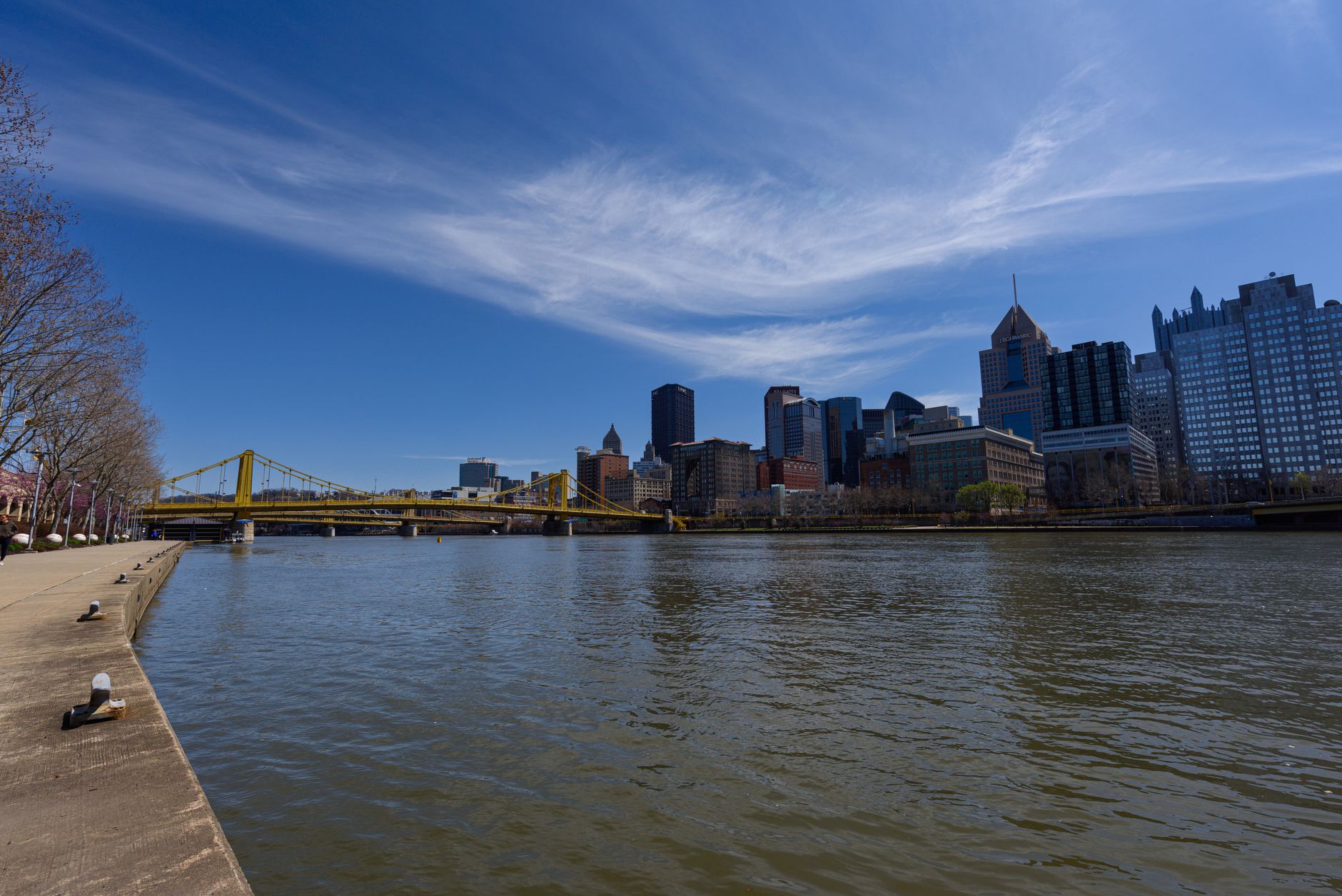
Pittsburgh: the Pittsburgh Technology Center built on the former site of the J&
L Steel mill; and Cool Space Locator, an innovative group “committed to the
mission of no more empty buildings in the city core.”
Both represent examples that breathe new life into cities instead
of fueling growth in the exurbs. “Sprawl,” Katz says solemnly, “is
unconscionable for environmental and other reasons.” Pointing to the “classic
lag between change on the ground and policy change”, he argues for greater acceleration
of reform particularly at the federal and state levels to combat it.
But the time may be right for a change in direction. “We’re
on the verge of big changes,” says Katz who names a list of recently elected
officials who could turn things around: Governor Eliot Spitzer in New
York, Virginia
Governor Tim Kaine, Maryland governor Martin O'Malley, among them. Both Democrat
and Republican, these leaders, are focused on city revitalization and smart
growth.” If they’ve been mayors, all the better,” says Katz. “Those who have
been mayors are a step ahead of the game. Mayors just intuitively understand
the value of cities and adjust policies.”
They understand, for instance, that cities today and in the future require more density, transit
and mixed use to be successful. Over the next 50 to 75 years, American cities
will look more like European cities, Katz predicts, although they'll lack the density. Environmental issues, he says, are just one of the driving forces that are
going to reward denser, smarter, more environmentally-friendly urban and
metropolitan development.
European cities, he points out, also went through industrial
shocks in the 70’s and the 80’s just like Pittsburgh
and Detroit in
recent years. On the upside, these
cities have revived quicker and sprawled less, containing growth by investing
heavily in waterfronts and city transit to channel development.
Each city, of course, is unique in its assets.
“Pittsburgh is
really quite different from a lot of midwestern cities because of the heavy
concentration of world-class higher-ed institutions like CMU, Duquesne, and
Pitt,” says Katz. “It’s a dramatically beautiful city because of the confluence
and topography of the region. What’s critical for Pittsburgh is to understand that these
physical and institutional assets are really its foundation on which to build.”
Tracy Certo is editor of Pop City.
Photos:
Bruce Katz
The "T" light rail (public transit)
School for the Creative and Performing Arts (CAPA), Downtown
Pittsburgh Technology Center
Katz at Heinz Awards
All photographs copyright © Jonathan Greene
except Bruce Katz © Jim Harrison
and Heinz Awards © Rocky Raco