Friday 3 July 2009
Pittsburgh mural (detail) by the Pittsburgh Technical Institute. Photograph by Brian Cohen |

The Great Adventure of Grassroots Racing

By: Jennifer McGuiggan
May 9, 2007

“I just remember trying to breathe going downhill on a mountain bike,” says Erin Estell as she recalls her first adventure race. The team sport combines elements of a triathlon with mental challenges, physical obstacles, and orienteering – all in a natural setting. Participants compete in teams of two or more and usually don’t know the exact details of a course until race day. Expedition length races, such as Primal Quest and the now defunct EcoChallenge, cover hundreds of miles, last for days, and resemble an episode of “Survivor.” Shorter races, called sprints, last just a few hours.

In 2006, a group of Pittsburgh adventure racing enthusiasts started Grass Roots Racing as a way to appeal to beginning racers and bring more sprint races to the area. The organization, which is headquartered in the Penn Avenue Arts District, will produce at least eight races this year.

Every adventure race is different, but all usually contain four main elements: trail running, mountain biking, swimming or paddling, and orienteering, also called navigation. Racers also face a variety of “hazards,” which could be anything from climbing a rock wall to using a fire hose to knock down a stack of barrels. Most of Grass Roots’ races are designed to take two to four hours, depending on a participant’s skill level.

“It’s a sport where you have to be flexible and be able to adapt to any situation,” explains Suzan Falvey, an exercise specialist from Lawrenceville who has been involved with adventure racing since 1997. “You never really know what distances you’re training for. For some of the races, you only know it’s a 50-mile course, so you have to be prepared for any amount of biking, running, or kayaking.”

Beginners Welcome

Grass Roots aims to take some of the guesswork out of their races by listing approximate distances for each race. “A lot of other races are so difficult that people won’t consider doing them, and only 10% of teams finish,” says Grass Roots Race Director Frank Eyth. “We needed to introduce a new element to the sport, increase the success rates, and make it fun.” Eyth previously worked for American Adventure Sports LLC, , another adventure race production company in Southwestern Pennsylvania. Unlike Grass Roots, many of their races are geared toward more advanced racers and take place in the Ohiopyle area, such as this summer’s 24-hour Lionheart Race, which will cover approximately 90 miles of terrain in the Laurel Mountains.

Although some adventure racers come to the sport from the worlds of road races and mountain biking, Estell, who works at the National Aviary, came to it mostly uninitiated and at the urging of friends. “I had never done anything like this before,” she says. “I’m a ballroom dancer, but that doesn’t really prepare you for adventure racing!” But with some training, Estell completed her first race in 2003 and has done about a dozen since then. “At first it was kind of scary, but now I love it,” she says.

While adventure racing can be intense--it’s sometimes called “the wicked stepparent to triathlons”--Grass Roots is working to bring more people into the sport by hosting shorter, more accessible races. “People assume that adventure racing is an extreme sport. Grass Roots Racing wants to make people aware of and respectful of the environment, and make them aware of themselves,” Eyth says. He advises that if you can run a 5K you’re ready for a Grass Roots race. “You won’t do it fast, but you’ll get through it,” he says.

SONAR – Season Opener Nemacolin Adventure Race

Race Director Bethann Scott reports that at Grass Roots’ most recent race, held at Nemacolin Woodlands Resort in Farmington, PA, more than half of the 60 participants were first time adventure racers and 75% of the participants were new to Grass Roots. Racers came from Pennsylvania, Ohio, Virginia, and New York.

The race started with an afternoon “prologue” that included a rock wall and ropes course. The main event contained a 2.5-mile run over rugged terrain, a muddy 9-mile bike ride, a second stint on the climbing wall, and 1.25 miles of navigation. Racers met with several hazards along the way, including the “Spiders and Bats” course in which one blindfolded racer (the bat) carried a teammate (the spider) on his or her back while navigating a “web” of ropes at knee-level. Other challenges included solving math equations to obtain navigation information and memorizing a selection of text while at the top of a 9-foot climb. Two all-male teams took first and second places, with a co-ed team taking third.

Beyond the Physical

Proponents of adventure racing stress that the sport is the ultimate combination of physical and mental challenges. Toby Angove, an Instructor/Recruiter with the ROTC and Army National Guard at Indiana University of Pennsylvania, describes adventure racing this way: “It’s your life compressed into 14 or 400 miles, whatever the distance is. You go through the ultimate highs and lows and learn everything there is to learn about yourself and your teammates.”

Scott, who started participating in adventure races after competing in marathons, triathlons, duathlons, and Iron Mans, says that the sport has taught her a lot about herself. “When I first started racing, the hardest thing for me was dealing with the unknown. Before adventure racing, I was a control freak. Adventure racing helped me to grow as a person as I learned to move beyond my control issues. It’s also given me better reasoning and logic skills and the ability to think on my feet.”

Co-ed Synergy

Traditionally, adventure racing teams were required to be co-ed. Today, while some races, including those produced by Grass Roots, allow single-gender teams, co-ed teams are rewarded with the most points and best prizes. “In other sports and races, you rarely ever put male and female teams together,” explains Eyth. “But when you do put them together, you create a phenomenal synergy.”

“I really like the co-ed aspect,” says Estell. “At first it can be intimidating. But once you get into it, you realize that it doesn’t matter if you’re male or female.”

Seth Gernot, an interior painter from Squirrel Hill, says he loves adventure racing “because it’s a team sport and it’s very social. It’s a lot of high-quality people out there having fun. The people that you race with turn out to become lifelong friends.” Gernot says that some of the best adventure racers are in their 40’s. The maturity and communication skills that come with age can enhance a racer’s ability due to the sport’s mental aspect. Eyth says that while the average age of racers is the mid-30s, the sport contains a lot of diversity.

Urban Adventure

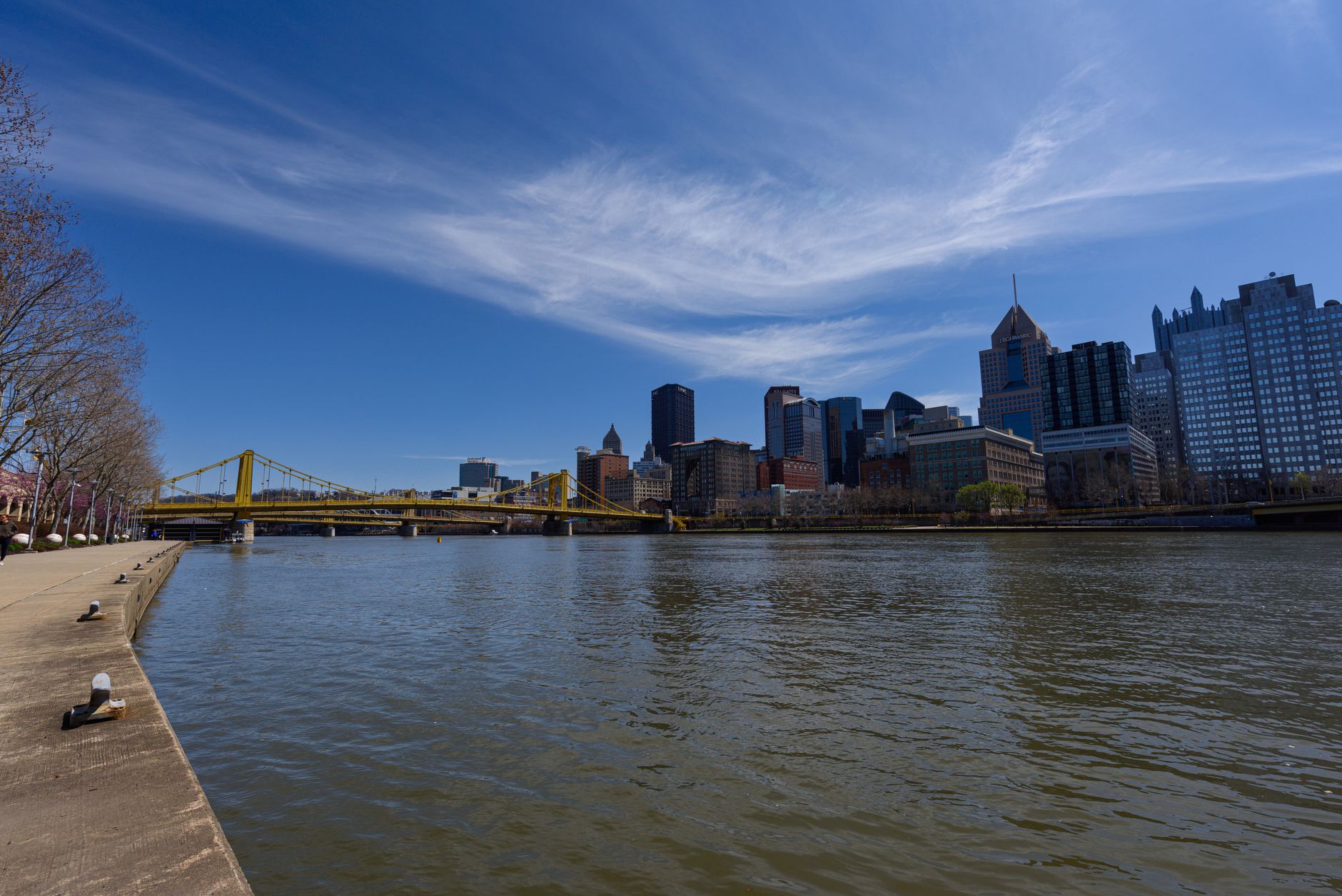
While some of Grass Roots’ races are held in rural settings like Nemacolin and Moraine State Park, the 2007 Grass Roots schedule includes a strong urban component with races planned for the North Shore and the South Side. In addition, Grass Roots will host “A Frick n’ Adventure Race” in Frick Park on June 16. It will include paddling on the Allegheny River and mountain biking and trail running in the park. “Urban races are so much fun. We have such a great city and we need to get people to see it,” says Falvey.

Even if you’re not up for participating in a race, consider attending one as a spectator. Grass Roots’ events are structured so that racers must pass through the “transition” area often, giving fans a chance to see some of the action and cheer on their favorites.

Racers agree that the hardest part of adventure racing is getting to the starting line. But once people get past their initial fears, most end up hooked. Eyth invites everyone – regardless of age or skill level – to try adventure racing. “Forget about the race aspect and think about the adventure,” he says.


Jennifer McGuiggan, a freelance writer and editor, is owner of The Word Cellar . She writes for a variety of publications and clients, including businesses, entrepreneurs, and non-profits. Her last article for Pop City was about green chemistry.

Photos:

All images from the 2007 SONAR race:

Group of runners

Navigating the 'rope and bridge' obstacle

Biking the course

"Spiders and Bats" portion of course

The 'rope and bridge' obstacle

High up on the rock climbing wall

All photographs copyright © Chuck Kozora